
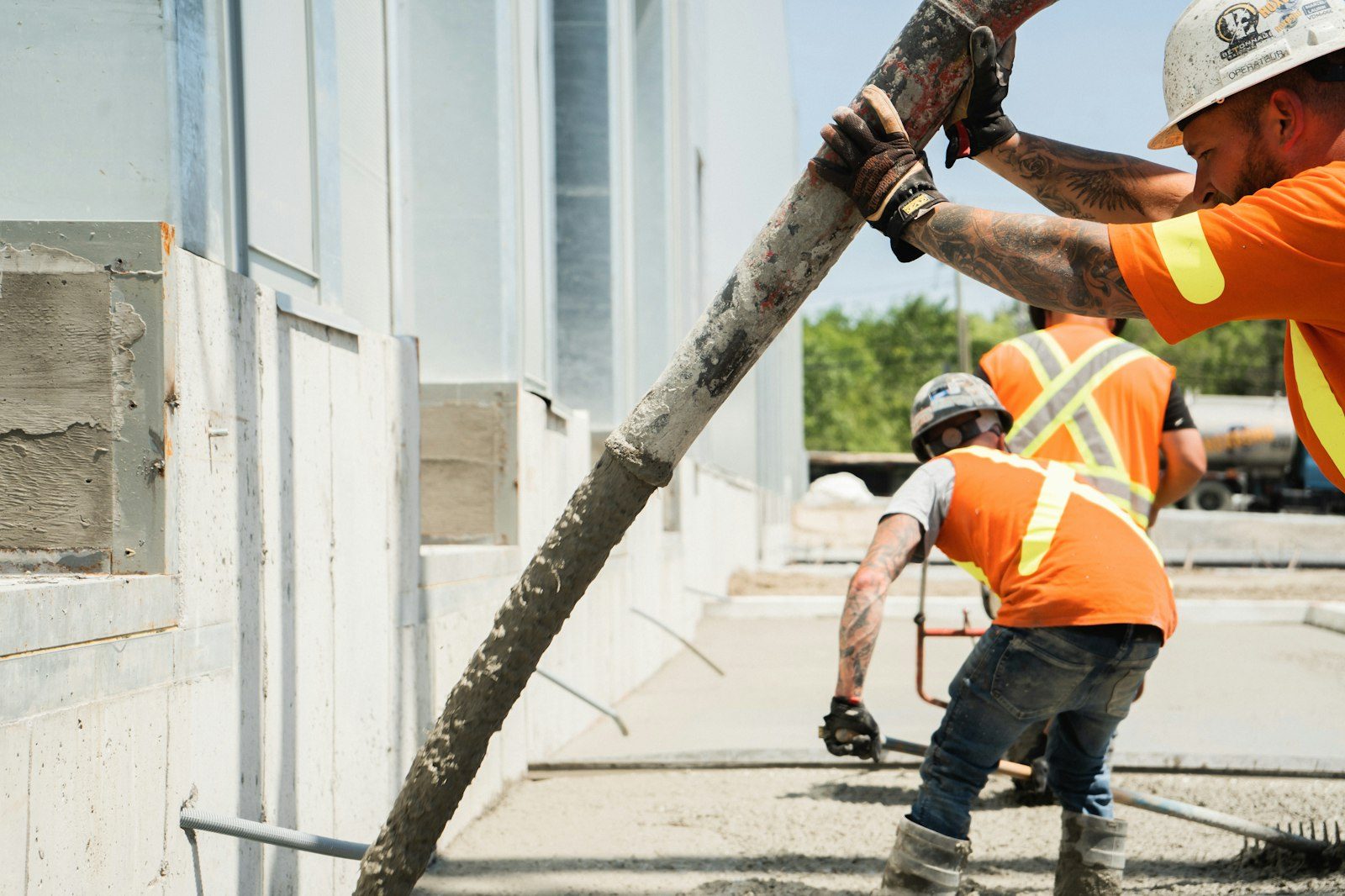
Tear-out, haul-off, and recycling, from one walkway panel to a whole shop slab on acreage.
Castle Rock is really three towns stacked on top of each other, and demolition work tells you which one you're standing in. Plum Creek and Founders Village hold the older housing, so the calls there involve thin slabs poured before anyone worried much about base prep, plus the odd 1970s carport pad nobody has parked on in decades. Cobblestone Ranch and The Meadows are newer, and those tear-outs are usually builder flatwork that failed early or a homeowner expanding a footprint the original plan never allowed for.
Then there's the acreage. Outbuildings, old horse facility pads, feed slabs, a barn floor cracked into pieces by thirty winters. Different scale, different equipment, same question every time: what's coming out, where's it going, and what do we do about the hole it leaves.
Anybody can break concrete. A rented breaker and a Saturday will do that. The part homeowners underestimate is that a two-car driveway turns into something like twenty tons of rubble, and rubble has to leave your property in vehicles that fit down your street. That's the actual work: staging, loading, hauling, and doing it without turning your lawn into ruts and your neighbor's parking spot into a staging yard.
We plan the exit before we plan the demolition. Where does the trailer sit. Can a roll-off land without cracking the apron we're keeping. Does a fence panel come out, or does all of it go through a thirty-six inch gate by hand. On tight lots in the older neighborhoods that answer changes everything, and it's worth having before a saw starts.
Saw cutting comes first on nearly every job. A clean wet-cut line between what stays and what goes leaves the remaining concrete with a square, sound edge instead of a ragged break somebody has to repair later.
Ask whether haul-off, disposal fees, and grading the exposed dirt are included. That's where the low number usually hides.
| What's coming out | How we break it | Access and haul notes |
|---|---|---|
| Residential walkway, four inches thick | Handheld breaker after a saw cut at the keep line | Wheelbarrow to the trailer. No machine on the lawn at all. |
| Driveway slab with welded wire mesh | Skid steer with a hydraulic hammer, then a grapple bucket | Mesh has to be cut free or it drags the next section along with it. |
| Rebar-reinforced patio or apron | Saw the perimeter, break in panels, shear the steel as we go | Steel gets separated and sent to scrap rather than landfilled. |
| Foundation or stem wall | Excavator-mounted breaker taking the wall down in lifts | Shoring and engineering review anywhere the wall is carrying load. |
| Barn or shop slab on acreage | Grid of saw cuts, then ripping with a toothed bucket | Volume climbs fast, so we stage a roll-off instead of running trailers. |
| Old pool shell | Punch the floor and collapse the walls in, or remove entirely | Full removal any time something will later be built on that footprint. |
Here's the good news about tear-out: it isn't a pour, so the weather rules relax considerably. We break concrete in January. Cold doesn't hurt broken concrete and it doesn't hurt a hydraulic hammer. What does complicate winter demolition is the ground underneath. Frozen subgrade won't grade smooth, and if you're planning to repour in the spring anyway there's an argument for leaving the old slab in place as a working surface until the ground softens.
The season that genuinely slows us is a wet spring. Saturated clay under a heavy machine turns into a mess that costs more to repair than the demolition saved, so after a long stretch of rain or a heavy melt we'll wait a couple of days. Late summer through fall is the smoothest run: dry ground, long light, and enough of a window afterward to pour before the first hard freeze if that's the plan.
If demolition and a new pour are both on your list, book them together. There's no reason to leave an open subgrade sitting through six weeks of weather collecting rain and losing compaction.
Old acreage slabs are the interesting ones. You saw a line, drop the hammer, and find out somebody poured it eight inches thick in 1968 with railroad rail for reinforcement. We've pulled some genuinely strange steel out of barn floors around here.Straight from the crew
Still unsure about something?
Call the crew at (303) 569-4046 and we will talk it through.

Get a free, no-obligation estimate from a crew that knows Colorado soil, Colorado weather, and how to finish concrete that lasts.
Accessibility
Adjust the site to fit how you read and browse. Your choices are saved on this device.