
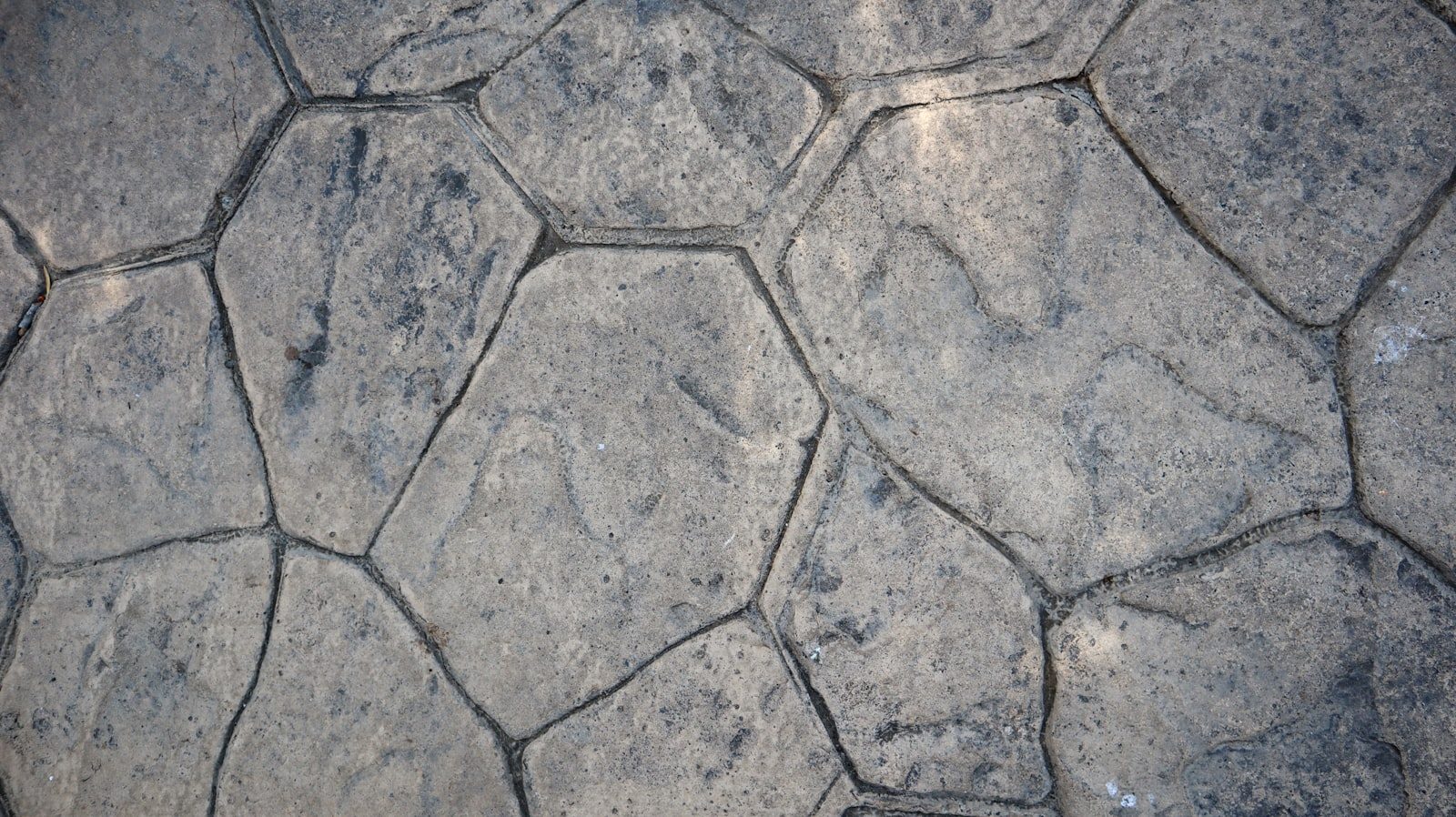
Slate, stone, and plank patterns pressed in during the one window that matters.
Plain gray concrete forgives a slow crew. Stamped concrete doesn't. From the minute the mix hits the forms, the surface is marching toward a firmness where the mats stop leaving a clean impression, and nothing on a job site pauses that clock. Get the color down, the release agent spread, and the stamps placed in sequence before the window closes, or live with the result for decades.
That's why stamped work is a specialty and not a side offering. We size every pour to what a crew can honestly texture in one window, and on a hot, dry day at this elevation that window shrinks fast. Castle Pines homeowners tend to know exactly how they want their hardscape to look. Our job is getting the concrete to agree.
We start early, truck rolling in not long after sunrise. Low sun, cool slab, more working time. The pour and screed go like any patio, then the choreography starts: color is already through the mix, release agent gets broadcast across the surface, and the mats go down in an overlapping sequence, two people placing while one tamps. Somebody watches the far corner the whole time, because the section poured first firms up first.
Dry air at 6,450 feet pulls moisture off a slab quicker than crews from wetter places expect. We plan for it: extra hands on stamp day, mats staged in order, pours split into sections we can genuinely finish. A sharp pattern with one blurry corner is a failed job in our book.
High-altitude UV bleaches cheap color work. The same sun that ages deck stain and car paint early up here lands on a stamped patio every cloudless day, and Castle Pines gets a lot of cloudless days. So we build color in layers that can take it: pigment mixed through the full depth of the concrete, an accent tone in the release agent that settles into the texture, and sealer over everything as the sacrificial coat that absorbs the UV hit.
Sealer is the maintenance deal you sign with decorative concrete. Let it wear off and the sun goes to work on your color while winter goes to work on your texture; freeze-thaw finds every low spot in a stamped surface where water can sit. Keep the coat renewed every couple of years and the finish stays remarkably close to pour day.
| Question | Stamped concrete | Pavers |
|---|---|---|
| Weeds and ants | No open joints for either to move into | Sand joints invite both; count on ongoing battles |
| Shoveling snow | One smooth plane; a plastic shovel just glides | Blade catches edges, and single units heave with frost |
| Holding its look | Depends on your resealing discipline | Color runs through each unit and wears evenly |
| When damage happens | Sections can be repaired, but invisible matches are hard | Swap the broken paver and no one ever knows |
| On our clay | One reinforced slab that moves as a unit | Hundreds of pieces riding the soil solo; wavy over time without serious base work |
Most of our stamped calls in Castle Pines are patios and front walks. In The Village at Castle Pines and Daniels Gate it's often entry courtyards and long walkway runs, where owners want a natural stone look that keeps pace with the home's finish level without the joint maintenance stone brings. Castle Pines North and Lagae Ranch lean toward backyard upgrades, replacing a builder-basic broom pad with something worth furnishing. And on BellaMesa's sloped lots, stamped steps and landings let us manage grade changes and still look like one continuous design.
Bring the photo. We'll tell you how it holds up at this altitude and what pouring it right involves. The estimate costs nothing.
We book stamped projects heaviest from late spring through early fall, and we're pickier about forecasts than we are with plain gray. A surprise shower during stamping wrecks texture in minutes, so a threatening radar can postpone a stamp day when the same sky wouldn't move a broom-finish pour. Fall projects need cure time banked before hard freezes, and we get the first sealer coat down before the slab ever meets snow.
Deep winter is mostly the wrong season for decorative pours. Heated water and blankets protect strength, but a decorative finish asks for conditions we can't fake in January. So winter becomes the planning season: pick the pattern, lock the layout, take an early spot on the spring calendar.
People assume the stamping is the hard part. The stamping is the fun part. The hard part is reading the surface, knowing when it's ready and how long you've got, and sizing the crew so nobody ends up stamping concrete that's already made up its mind.What the crew sees on site
Still unsure about something?
Call the crew at (303) 569-4046 and we will talk it through.
Get a free, no-obligation estimate from a crew that knows Colorado soil, Colorado weather, and how to finish concrete that lasts.
Accessibility
Adjust the site to fit how you read and browse. Your choices are saved on this device.