
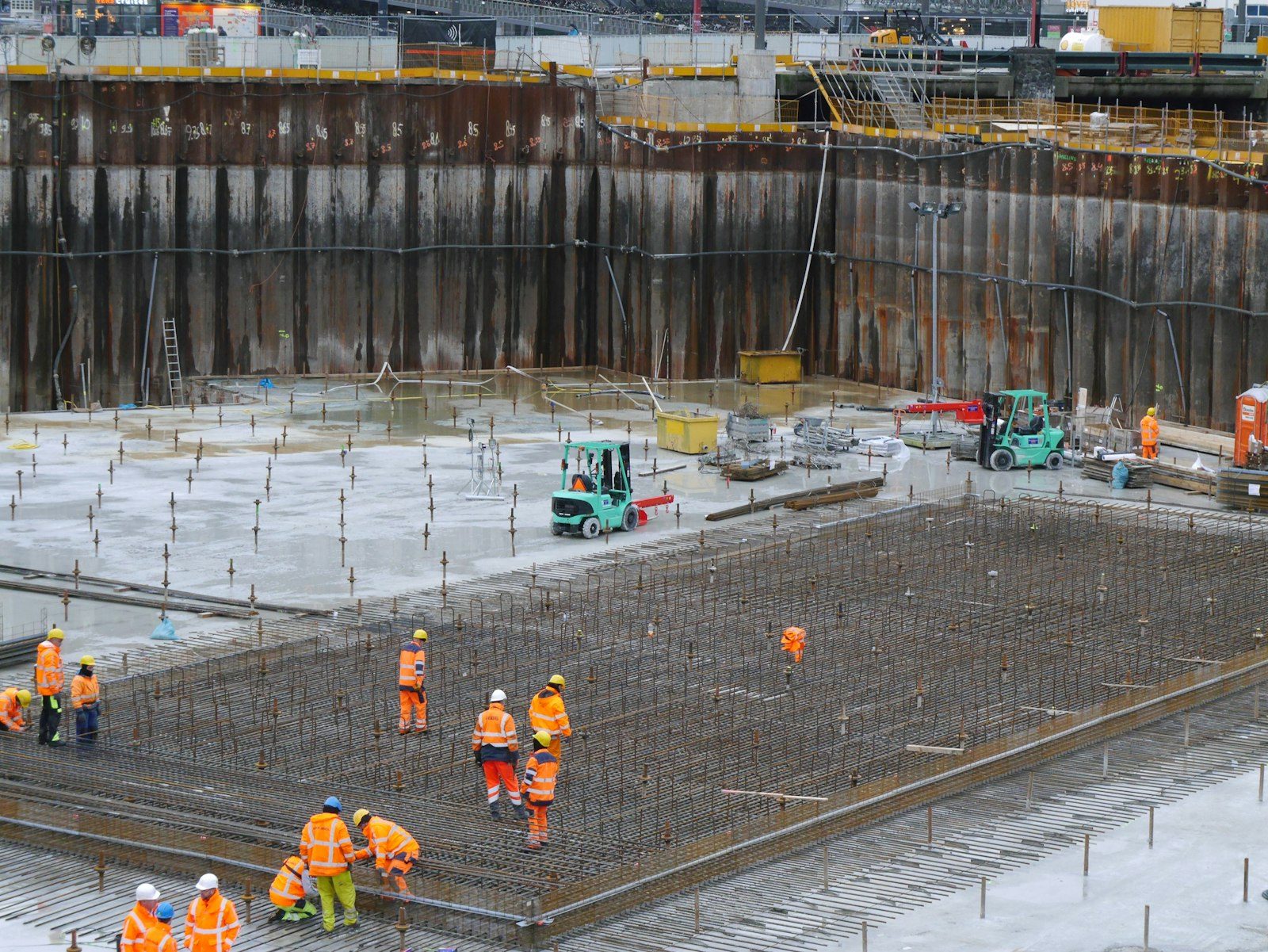
Demo, regrade, and a new pour timed to the Front Range weather window.
The first warm stretch of March tells on every driveway in Castle Pines. Snowmelt runs all day, refreezes overnight, and by the weekend a crack that was hairline in November has a raised edge you can catch a boot on. Freeze-thaw doesn't wear a slab down evenly. It finds the weak panel, works it all winter, and hands you the bill in spring.
If your driveway came out of this winter worse than it went in, replacement is probably the honest answer, and we'd rather say so at the estimate than sell you a patch that dies by August. We handle the whole job: saw-cut, break-out, haul-off, regrade, and a new slab built for the next thirty winters instead of the last one.
Repairs make sense while the base under the slab still does its job. Once the base fails, nothing you do at the surface holds. The signals are consistent. Panels that heave every winter and never quite settle back level. Cracks wide enough to swallow a car key, with one side sitting higher than the other. A slab that pitches toward the garage so meltwater ponds at the door. Spalling that returns the season after it was patched.
On the hillside lots around Daniels Gate and Castle Pines North we see one more: erosion doing quiet work at the downhill edge, hollowing out support until a corner snaps off under a tire. When two or three of these show up together, you're not maintaining a driveway anymore. You're subsidizing one.
You can hear the difference during demo. A slab over good base thumps solid under the breaker. A slab over washed-out clay rings hollow before we've broken a single panel. By the time the machine's off the trailer, we usually know why the driveway failed.Straight from the crew
Tell us what your driveway did this winter. We'll tell you straight whether it can wait for the spring schedule.
| Season | How the work goes | The catch |
|---|---|---|
| Spring | Ground's thawed and the calendar is wide open | Wet weeks push pour dates; we won't pour into mud |
| Summer | Fast cures, long days, quick turnarounds | Afternoon storms mean sunrise starts and plastic sheeting on the truck |
| Fall | Our pick: warm days, cool nights, a steady cure before the freeze | Book early, because everyone else figures this out too |
| Winter | Doable with heated mix water, accelerators, and curing blankets | Frost in the subgrade stops everything; some weeks we simply wait |
Replacing a drive in The Village at Castle Pines is rarely a small project. The approaches run long, sometimes curve through trees, and demo has to be staged so you're never completely cut off from your own garage. We plan those in phases. Over in Lagae Ranch and BellaMesa the housing stock is newer, so full tear-outs are less common; those calls tend to be a settled section near the apron, or a drive that went in before the lot finished compacting and has been sinking politely ever since.
Most residential replacements run about a week from first saw-cut to first parked car, and the concrete sets most of that schedule. Demo and haul-off take a day. Grading, base, and forming take another, longer when the lot drops hard from garage to street, which in this town it often does. The pour itself is a morning.
Then the waiting, which we won't shortcut for anybody. Walk on it after a day or two. Park a car at seven days. Hold the RV and the moving truck until day 28, when the mix hits design strength. We write the dates down on pour day so nobody has to guess.
Still unsure about something?
Call the crew at (303) 569-4046 and we will talk it through.

Get a free, no-obligation estimate from a crew that knows Colorado soil, Colorado weather, and how to finish concrete that lasts.
Accessibility
Adjust the site to fit how you read and browse. Your choices are saved on this device.