
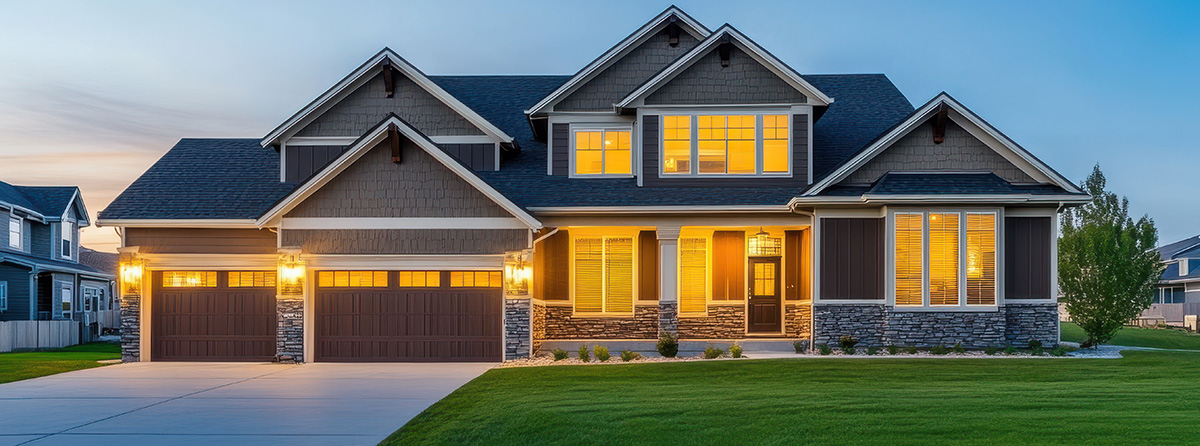
Backyard concrete that holds its own behind a custom home.
Castle Pines was built by people who cared what things look like. Walk through Daniels Gate or The Village at Castle Pines and you see it in the rooflines, the stonework, the way houses sit back in the trees. A patio behind a home like that can't be an afterthought pad with a wavy edge. The concrete has to meet the standard the rest of the property already set.
That's the work we like. Crisp form lines. Joint layouts that look intentional instead of accidental. A finish chosen for the light the yard actually gets. And underneath the pretty part, the same structure we put beneath driveways: compacted base over this county's moody clay, reinforcement where it belongs, and a grade that sends every drop of water away from your foundation.
Bigger than you'd think, mostly. An outdoor kitchen wants depth behind the counter line. A dining table for eight needs room to pull chairs back without anyone stepping off an edge. So when a homeowner in BellaMesa or Lagae Ranch sketches a modest square, we walk the furniture layout with them and watch the sketch grow. Concrete is one of the few upgrades where the extra square foot is cheap while the truck is already parked out front.
The other request is quieter: make it fit the house. Sometimes that's a warm stain, or an exposed aggregate band at the border. Sometimes it's nothing fancy at all, just a clean broom finish with tight edges. Restraint reads as quality out here.
| Finish | Why people pick it | What to know first |
|---|---|---|
| Broom | Clean, grippy, timeless | The texture hides minor wear and gives real traction when it snows |
| Exposed aggregate | Stone character without laying stone | Feels sharp on some bare feet; keep it sealed to hold the look |
| Stamped | Pattern and color, slate or plank looks | Plan on resealing every 2 to 3 years under this sun |
| Stained | Deep color on a smooth trowel | Slick when wet, so we mix grit into the sealer on walking paths |
Spring slots go fast. Get a free layout and quote now and pick your pour week while the calendar's still open.
Altitude changes patio design more than people expect. The UV up here is harder on surfaces and skin than the same afternoon at sea level, so a west-facing patio without shade can be unusable at 4 pm in July and rough on color besides. The pines that shade half this town help, but shade cuts the other way in winter: snow that never sees direct sun just stays, and ice hangs on wherever the house blocks the low southern light.
So we talk placement before we talk pattern. Morning coffee wants east light. Dinner wants western shade or a cover over it. And every patio, wherever it lands, gets pitched away from the house, because a slab draining toward your foundation is a basement problem you paid extra to install.
The backyard grade decides half the design in this town. We spend more time working out how to land a level patio on a sloped lot than on any other single question. Get that right and the rest is finish work.Straight from the crew
April through October covers most patio pours here, and the shoulder months are underrated. A May pour gives the slab a whole summer to cure and season before its first freeze-thaw winter. A September pour gives you cool working weather and a patio ready the minute spring shows up. July is fine too; we start at sunrise and finish ahead of the afternoon buildup, since rain landing during finishing leaves a weak, chalky surface nobody wants to stare at from the kitchen window.
Winter patio pours can be done with heated mix and curing blankets, but for decorative work we usually tell people to wait for spring. On a patio, how it looks is most of what you bought, and January is a bad month to bet the looks.
Still unsure about something?
Call the crew at (303) 569-4046 and we will talk it through.
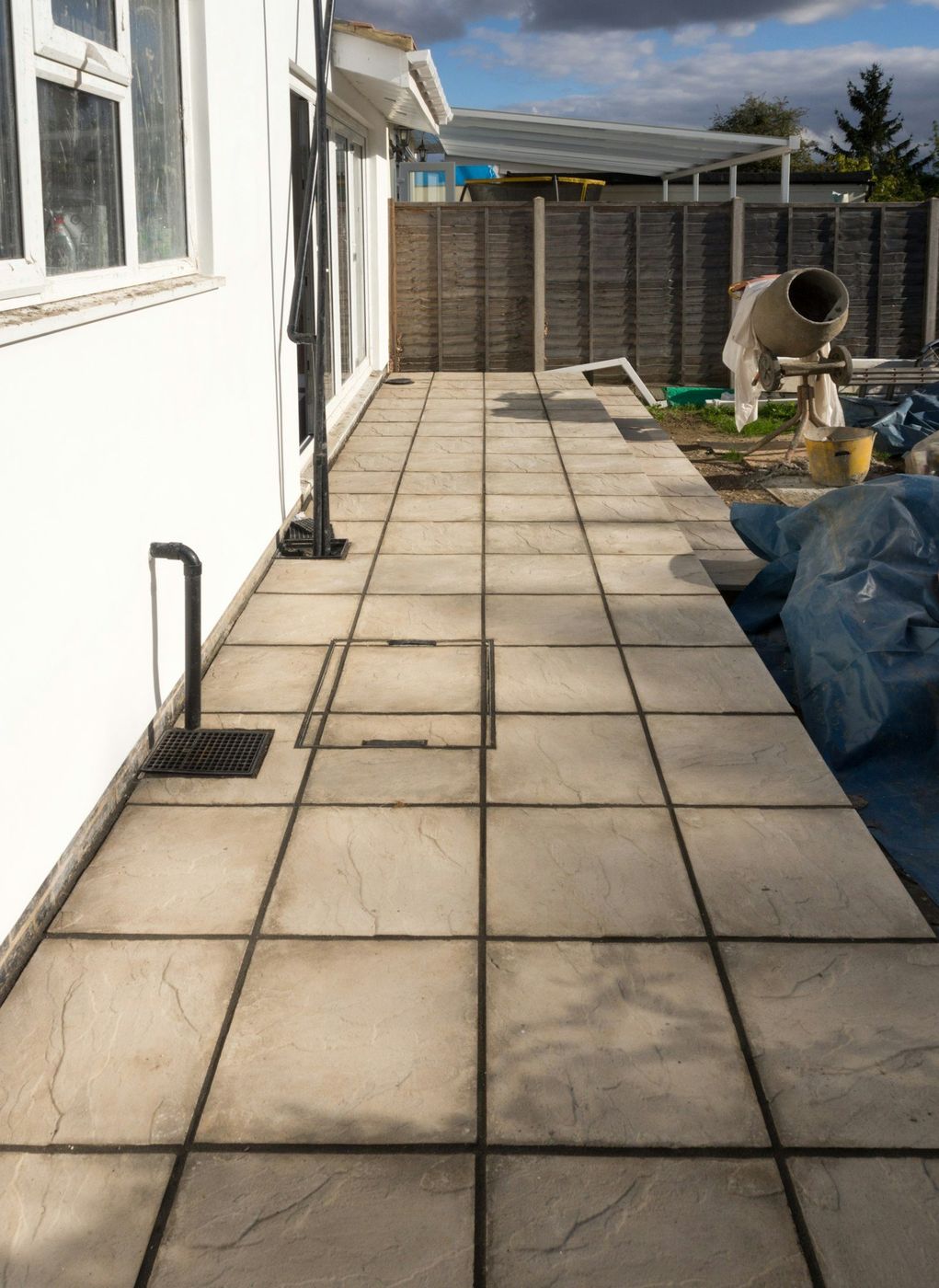
Get a free, no-obligation estimate from a crew that knows Colorado soil, Colorado weather, and how to finish concrete that lasts.
Accessibility
Adjust the site to fit how you read and browse. Your choices are saved on this device.