
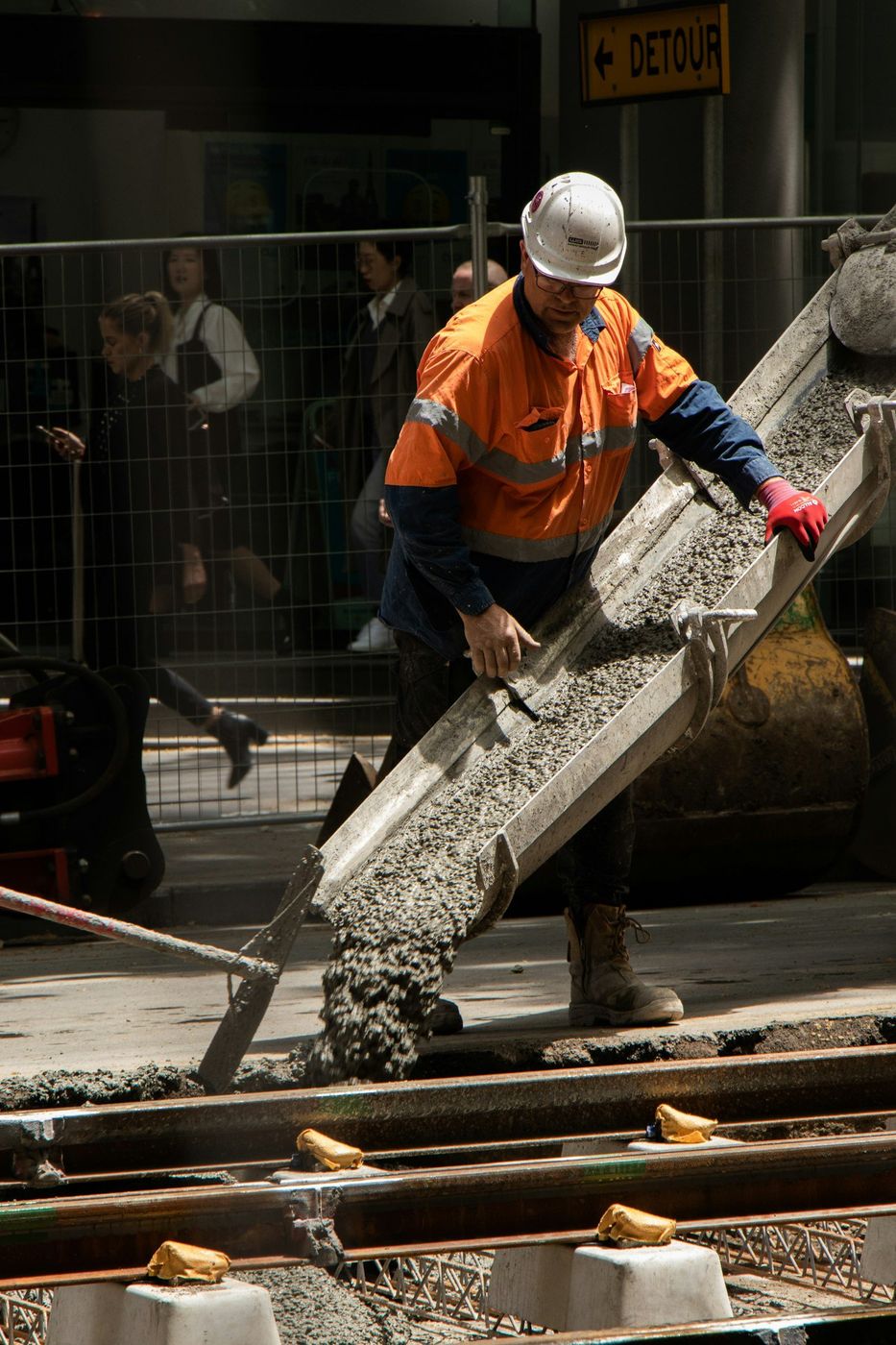
Orange paint goes down before the saw comes out. Every cut line is decided before anything gets loud.
Repair day begins quietly. We walk the slab with you, paint the panels that are coming out, chalk the saw lines, and agree on where the new work will meet the old. Then the saw runs and the rest of the morning is noise and dust. Most of the job is decided before a blade spins.
Not everything on this hill needs replacing. A garage apron that flaked after a few winters of shovel and ice melt. Two walkway panels in Daniels Gate that split over a settled utility trench. A patio corner up in Castle Pines North where the edge crumbled while the field stayed tight. Those are repairs, and we'd rather cut out sixty square feet and blend it than sell you a slab you didn't need.
First cut is a full-depth saw pass along the chalk, straight through the slab, right at a joint line wherever one exists. Cutting at a joint hides the seam. Cutting mid-panel advertises it forever. The broken pieces come out with a jackhammer and a skid loader, and they go into the trailer as they come up, because a pile of rubble on a Castle Pines lawn is how you buy sod.
Then we get to the part nobody photographs. We look at the hole. If the gravel under the old panel washed out or was never there, we fix that before anything else, hauling in road base and compacting it in lifts until a boot heel leaves no print. Drill and epoxy the dowels into the adjacent slab so the new panel and the old one move together. Forms, steel, screed, float, broom. Joint the fresh work to match the pattern already in the drive.
Crew is usually gone by mid-afternoon. The concrete keeps working for a month.
| What we find | What we do | Where the line is |
|---|---|---|
| Tight crack, both sides level, no movement | Rout and fill with flexible sealant | Once the crack widens past a quarter inch or the sides step, filling is cosmetics. |
| Flaked or pitted top layer, sound slab beneath | Partial-depth patch or bonded overlay | Damage deeper than the top half inch means the patch will pop off within a season. |
| One panel broken into pieces, neighbors fine | Saw the panel out and repour it | Cheap and quick. The catch is a slight color difference that fades over a year or two. |
| Crumbling edges along a garage apron | Form and repour the apron strip | Edge damage spreads inward. Waiting turns a strip job into a driveway job. |
| Several panels cracked in the same direction | Stop repairing, look at the base | Repeating cracks are a soil and drainage message, not a concrete problem. |
Text a picture of the worst section to (303) 569-4046 and we'll tell you whether it's a patch or a bigger conversation.
May through mid-October is the easy window. Warm ground, warm nights, quick set. September and early October are our favorite weeks all year because the afternoon storms have mostly quit and the concrete gets a long, gentle cure before anything freezes.
Small repairs go in through the winter too, which surprises people. A panel cutout is a fraction of the volume of a driveway pour, so heated water, a non-chloride accelerator, and blankets over the fresh work do the job on a clear day in the thirties. What we will not do is set concrete on frozen base. Frost under a patch turns to void by April, and the crack comes right back. If the ground's hard, we say so and put you on the spring list.
Summer brings the other problem: those Douglas County storm cells that build over the Divide and drop on you at 3 p.m. Rain landing on concrete that's still being floated washes cement out of the surface and leaves a chalky, weak skin. We watch radar all afternoon and keep plastic on the truck.
People apologize for calling us about one bad panel. Don't. One panel caught early is a morning of work. The same panel ignored for three winters takes its neighbors down with it, and now we're pricing half a driveway.The crew lead's read on it
Still unsure about something?
Call the crew at (303) 569-4046 and we will talk it through.
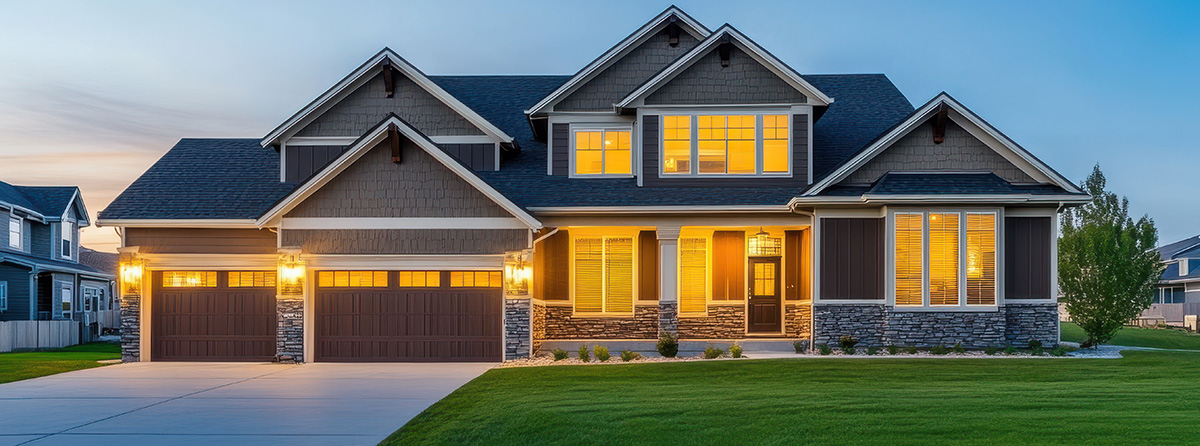
Get a free, no-obligation estimate from a crew that knows Colorado soil, Colorado weather, and how to finish concrete that lasts.
Accessibility
Adjust the site to fit how you read and browse. Your choices are saved on this device.