
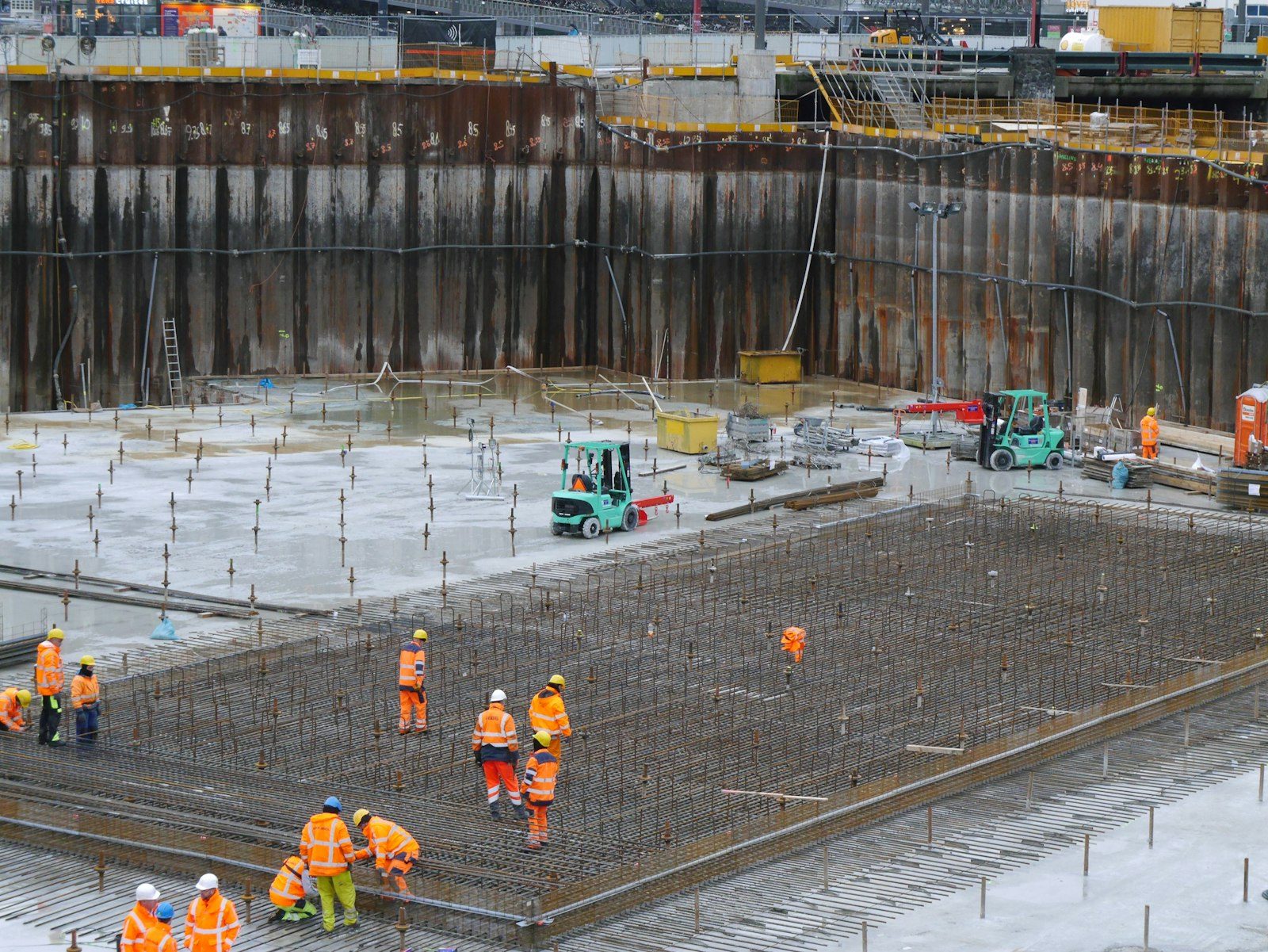
You use these every day of your life and you will never once look at them.
Count the times a footing goes to work at your house. Somebody leans on the deck rail. Four feet of heavy March snow parks itself on the covered patio roof. The hot tub fills and holds a load for years without a break. A gust front comes off the plains in July and tries to pick the whole pergola up like a kite. All of that lands on a column of concrete nobody in the family has ever seen or thought about.
That's the strange thing about bearing work. It's the most used and least noticed concrete on any property. Get it right and forty years pass without an incident. Get it shallow, undersized, or bearing on soil that was never going to hold, and the structure above starts sending you notes: a gap at a post base, a stair that pulled off its landing, a gate that only drags in April.
| What you want to add | What it changes underground | How we handle it |
|---|---|---|
| A hot tub on an existing deck | Point loads far beyond what a deck footing plan assumed | New piers under the tub footprint, sized off filled weight plus occupants |
| A solid roof over a deck or patio that had none | Snow load plus wind uplift on posts that were carrying nothing but shade | Larger piers, uplift-rated bases, and a rechecked spacing layout |
| An outdoor kitchen along one edge of a covered patio | A concentrated line load where the slab was designed as a floor | A footing under the masonry run, isolated from the surrounding flatwork |
| Parking a trailer or stacking material beside a deck | Surcharge next to supports that were never sized for it | Move the load, or add bearing. Those are the only two answers |
| Hanging a swing or heavy shade sail | Uplift and lateral pull, which act very differently than downward weight | Hardware and pier sizing matched to pull, not just to weight |
Most people picture a footing resisting weight. On the Front Range the load that ruins small structures usually runs the other way. Soil that takes on water can push a shallow support upward, and unlike settlement, heave doesn't need decades. One soaked autumn followed by a hard freeze can lift a post enough to open a visible gap. Then spring comes, the ground gives the water back, and the post drops most of the way down again. That seasonal wobble is what people describe when they say a gate only sticks in one part of the year.
Wind is the second uplift problem. A covered patio or pergola is a wing. The roof plane catches a summer downdraft and tries to lift the posts out of their bases, and the connection at the bottom of the post is where that fight gets decided. Post bases rated for tension, anchored into the pier rather than screwed to the top of it, are not an upgrade. On this ground and in this wind they're the baseline.
We see both problems around town, in newer construction near Sterling Hills and Saddle Rock where a shade structure went up after closing, and on older properties where a deck was built when a two-foot hole passed for good enough.
Text a photo from the yard plus one at the post base. We'll tell you if it's bearing or cosmetic before we schedule anything.
Spring through late fall is the workable stretch, and early fall is the best of it: dry soil, long enough days, and concrete that gains strength before the first hard night. Spring works fine once holes quit taking on meltwater. Any hole that fills gets pumped and re-inspected before concrete goes in it, because a footing placed into standing water is a footing you'll be buying twice.
Winter work happens. Frost here acts like a lid more than a wall, often a foot or two of hard ground sitting over dirt that drills normally. We thaw instead of chipping, warm the mix water, insulate the tops, and tarp anything open at night. Slower, pricier, and still better than watching a deck drop another inch until May.
One rule holds in every month: no concrete against frozen soil. That soil pulls back the moment it thaws and leaves new bearing sitting over a gap nobody can see.
Still unsure about something?
Call the crew at (303) 569-4046 and we will talk it through.

Get a free, no-obligation estimate from a crew that knows Colorado soil, Colorado weather, and how to finish concrete that lasts.
Accessibility
Adjust the site to fit how you read and browse. Your choices are saved on this device.