
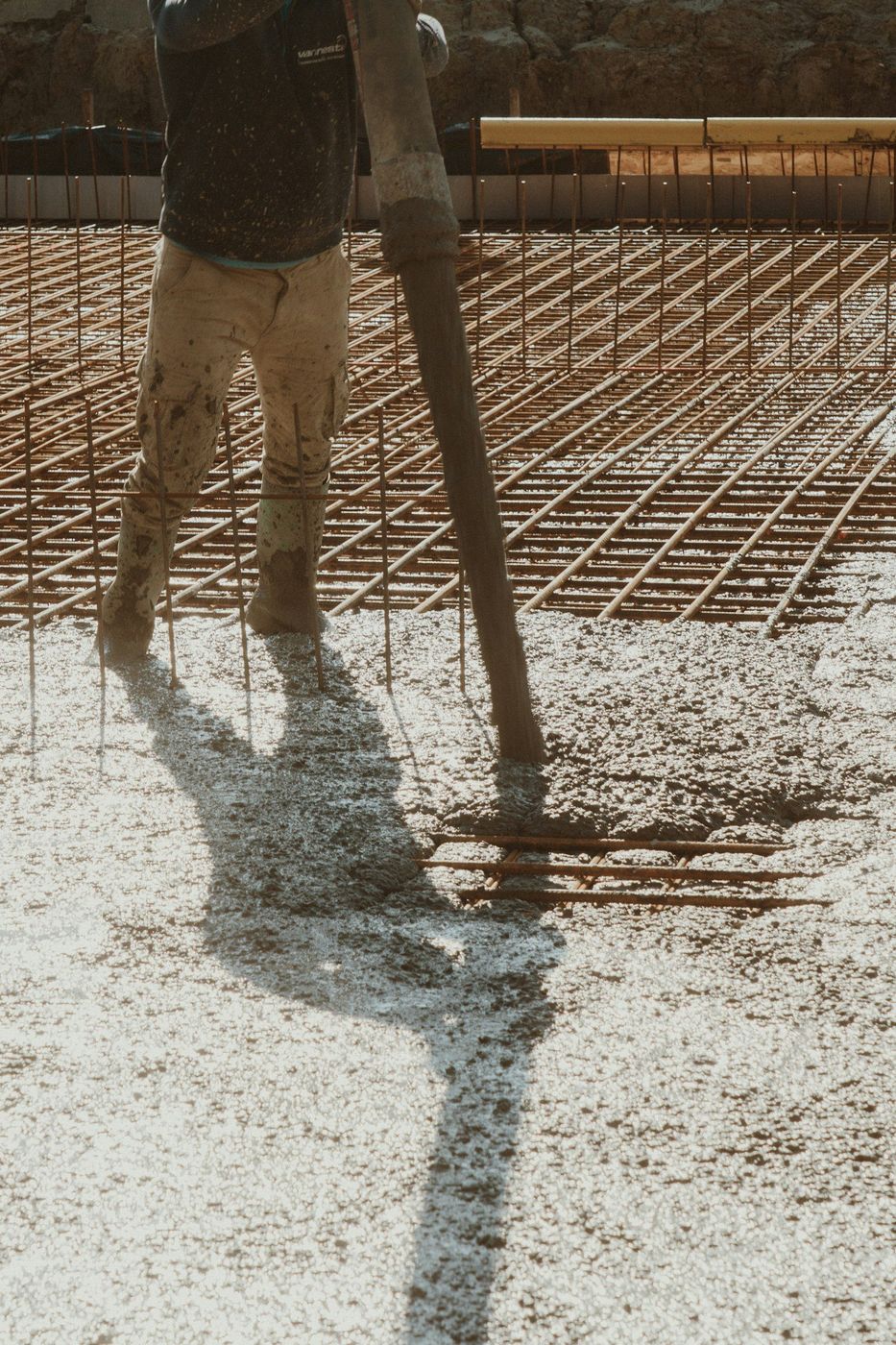
Count what rolls in and out of that building in a year. That's the spec, not the square footage.
An outbuilding pad gets used far harder than anyone expects, and almost never the way the catalog photo suggests. Think about a normal year. The mower goes out and back twice a week from April through October. The snowblower makes the same trip all winter with its scraper down. Bikes, a wheelbarrow, bags of soil, a hand truck under a loaded tote. Hundreds of crossings over one threshold.
Build the pad around those trips and the building stays easy to use for twenty years. Build it around the footprint on the order form and you get a lip at the door, a wheel drop at the edge, and a puddle exactly where you stand to work the latch. We pour these from small garden buildings on tight lots to real workshops out around West Woods and Whisper Creek.
Every problem people have with an outbuilding shows up in the first eighteen inches inside the door. A mower deck hangs low. A snowblower rides on skid shoes. A hand truck under a heavy tote wants a continuous surface, not a step. So pad elevation gets set off the building's own sill detail rather than guessed at, and the concrete finishes flush with where that floor will sit.
Then we build fall away from the door. An eighth of an inch to the foot is plenty, but it has to run the right direction. A pad sitting dead flat, or worse, tipped back inside, sends every storm and every melt under the door and across whatever you keep down low. Get that wrong and you'll be stacking things on pallets for the life of the building.
One more piece worth the concrete: a landing outside the door. Somewhere to set a bag down, turn a mower around, and stand while you work the latch. People skip it and regret it every Saturday.
Contents drive the build more than footprint does. A pad holding rakes and a push mower has an easy life. A pad holding a garden tractor, a welder, and a wall of shelving stacked with paint carries real point loads, and the perimeter feels it first.
Below the slab, drainage beats mass. We over excavate, lay aggregate that moves water sideways rather than holding it in a bathtub under the concrete, compact in lifts, and grade the finished dirt so it falls away on all four sides. That helps more than an extra inch of slab would. Heavier buildings get a thickened edge or footings below frost depth, because nobody heats a shed and the ground under one freezes right along with the yard.
Then anchors. Wind out here isn't decorative. A shed is a box with a large sail on top, so wall plates get bolted down rather than left sitting politely on concrete. Bolts go in wet, positioned off the manufacturer's sill layout.
| What's rolling | What it needs | How we build for it |
|---|---|---|
| Push mower, twice a week for six months | A flush threshold and no lip at the door | Pad elevation set off the building's sill height, with the door edge finished square |
| Riding mower or zero turn | Turning room outside and an edge that doesn't crumble under a pivot | Apron at the door wide enough to turn on, edges hand tooled rather than left raw |
| Snowblower with the scraper down | Grip when wet, and no joint deep enough to grab a skid shoe | Broom pulled across the travel direction, joints cut clean and shallow |
| Wheelbarrow loaded with soil or rock | Support right at the perimeter, where a small pad cracks first | Thickened edge and compacted base carried out past the forms |
| Hand truck under a full tote | Flatness. A rocking hand truck dumps whatever is on it | Screeded and floated to a true plane, checked with a straightedge |
Send the model, the footprint off the drawing, and your delivery date. We'll say plainly whether a pad can be cured in time. (303) 569-4046.
Whatever you keep in there leaks a little. Mower gas, chain oil, the bottom of a paint can, a fertilizer bag that split. Bare concrete drinks all of it and stains for good. A penetrating sealer put down after cure turns cleanup into a rag job, and it leaves no film to go slick under a wet boot.
The hose is the other half. People rinse a mower deck or clean out a tote there, and that water needs somewhere to go besides back through the doorway. The fall that handles rain handles this too, as long as the ground around the pad isn't built up higher than the concrete.
April through October suits small pours, September best of all. Winter works on something this size since blankets cover the whole slab, though frozen subgrade stops us. First winter, keep ice melt off the pad and off the approach to the door.
Still unsure about something?
Call the crew at (303) 569-4046 and we will talk it through.

Get a free, no-obligation estimate from a crew that knows Colorado soil, Colorado weather, and how to finish concrete that lasts.
Accessibility
Adjust the site to fit how you read and browse. Your choices are saved on this device.