
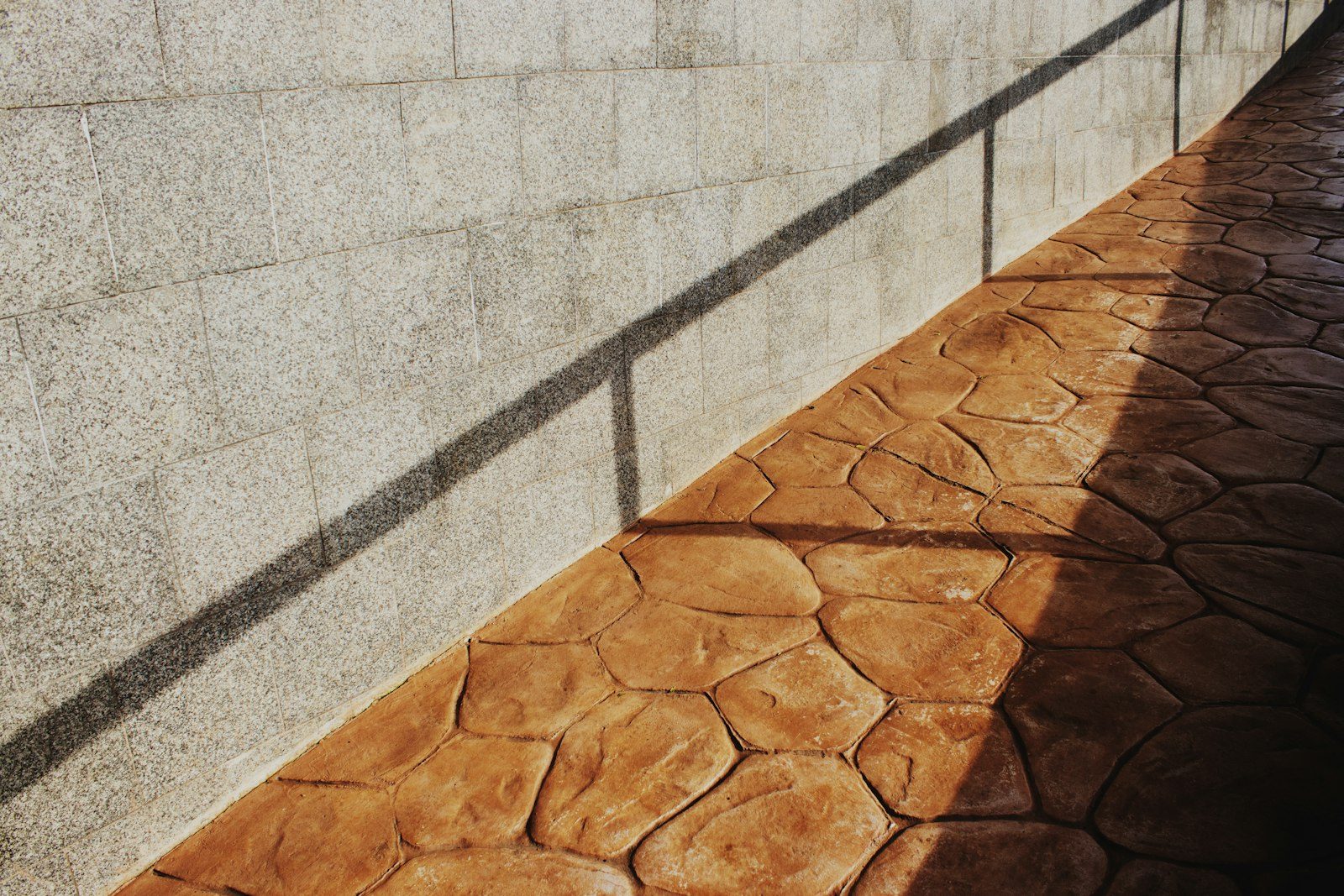
A front walk loses more ground in one March thaw than in all of January.
Mid March, and the walk out front is doing something odd. By two in the afternoon it's dry and warm enough to sit on. By ten that night the puddle at the low end has gone hard again. Repeat that forty or fifty times between February and April and you've described the roughest stretch of the year for narrow concrete. Worse than any January cold snap, when the ground simply stays locked and quiet.
That daily swing is why the phone rings in April. People come out of winter and notice a lifted joint, a crumbling nose along the lawn edge, or a low spot holding water where it used to shed. We work paths from the short front runs around Olde Town to the long approaches out in Leyden Rock and Whisper Creek, and the thaw finds the weak one on every block.
A four foot walk is mostly edge. Same concrete as your driveway, same weather, but a drive has mass in the middle holding it down and a walk has almost none. Frost reaches under a path from both sides at once with nothing on top arguing back.
The lift itself is small, a fraction of an inch on any given night. What gets you is the ratchet. Ground swells, the panel rides up, then the ground relaxes and the panel drops back a little less than it rose because loose material has slid in beneath it. Fifty nights of that and one end of a run sits proud of the next. Now you have a lip, and the lip catches a shovel, a toe, and a mower wheel.
The surface takes its own beating at the same time. Water soaked into the top skin freezes at dusk and pushes outward hard. Concrete placed without entrained air has nowhere to put that pressure, so it sheds in flakes.
| Time of day | What's happening at the walk | What it does over a hundred repeats |
|---|---|---|
| Morning, still frozen | Yesterday's meltwater is locked in the base and in the surface pores | Nothing yet. Damage happens on the way in and out of this state |
| Late morning sun | The exposed end thaws while the shaded end by the house stays hard | Half a panel moves and half doesn't, which is how a crack picks its line |
| Mid afternoon | The snowbank along the edge runs straight down beside the slab | Base gravel stays saturated instead of draining, so it stops carrying weight |
| Late afternoon | Surface water drains to the low panel and stands in the joint | Standing water at a joint is where nearly every spall we see gets started |
| Overnight | Everything that soaked in freezes and expands | The panel lifts a hair, settles back less, and does it again tomorrow |
Send a couple of photos. We'll say whether it's a two panel fix or a full run. Estimates cost nothing. (303) 569-4046.
Nobody thinks of shoveling as a construction decision. It is one. Toss every storm onto the same side and by February there's a compacted bank sitting against the concrete, and that bank is a slow drip line for six weeks straight. All of it soaks in right where the slab has the least support underneath.
So: throw wide, past the edge, and switch sides when the pile gets tall. Keep it off the seam where the walk meets the sod. And watch the strip along the north wall of the house, the one that never sees direct sun from November to March. That's the stretch that stays wet longest and fails first, which is why we build extra fall into shaded side paths instead of matching the pitch of the sunny half.
Late April through October is the honest season, and September is the pick of it: cool mornings for finishing, warm afternoons, weeks of mild weather ahead before the ground turns.
Early spring is trickier than people assume, and air temperature isn't the reason. It's the subgrade. Ground still frozen won't take compaction, and ground just thawed into mud won't hold it. We'd rather push you two weeks than build on dirt we don't trust. Cold weather work happens on a narrow run, since blankets cover it end to end, but frozen ground is where we stop. Then give the new concrete one winter with no deicer.
Spring is when people finally look down. The walk didn't go bad in a week; it's been ratcheting up since Christmas. The tell is one panel standing proud of its neighbor, hairline gap under the high side.From the crew lead on these jobs
Still unsure about something?
Call the crew at (303) 569-4046 and we will talk it through.
Get a free, no-obligation estimate from a crew that knows Colorado soil, Colorado weather, and how to finish concrete that lasts.
Accessibility
Adjust the site to fit how you read and browse. Your choices are saved on this device.