
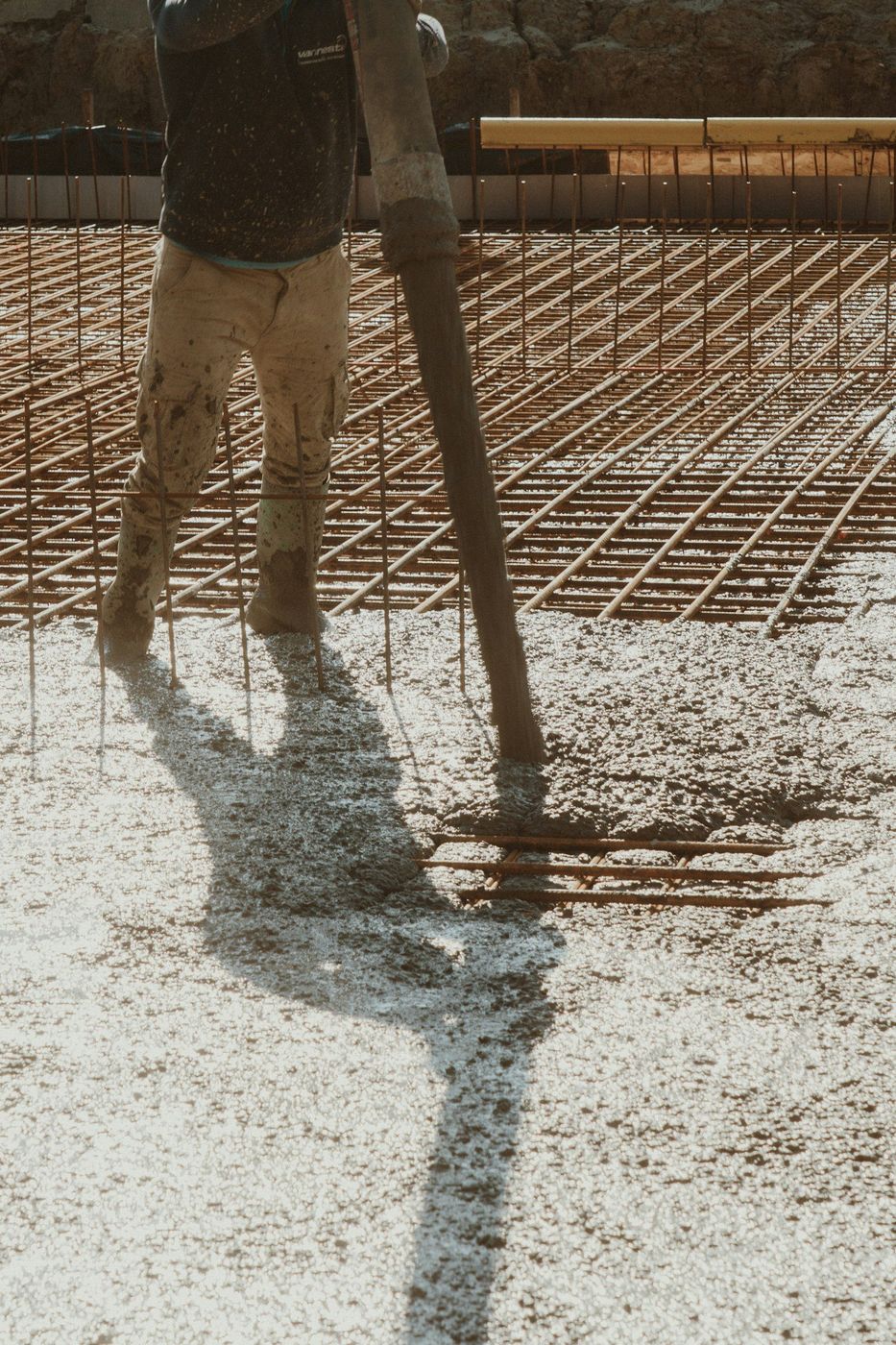
A dry wind is harder on fresh concrete than a rainstorm, and it never shows up as an icon on anybody's forecast.
Rain gets all the attention. Everybody knows a storm during finishing is bad news. The condition that actually costs us slabs around here is a warm dry afternoon with the wind moving, because wind pulls water off the surface faster than the concrete can bring it up, and a slab drying from the top down cracks in thin ragged lines before anybody has laid a broom on it.
Finishing is the last four hours of a pour and it settles everything you'll look at for the next thirty years. Texture, color uniformity, how water sheds off it, whether it dusts. We pour flatwork all over Arvada and we plan the finish around the weather we're going to get, not the weather we'd prefer. Sometimes that means changing the texture we agreed on. We'd rather tell you that at seven in the morning than hand you a slab that came out wrong.
Concrete bleeds. Water rises to the surface after placement, sits there a while, then leaves, and the entire art of finishing is knowing when that has happened. Wind destroys the timing. It evaporates bleed water as fast as it arrives, so the top of the slab stiffens while the concrete two inches down is still soft. Trowel it in that state and you seal moisture underneath a crust. Wait too long and you can't work it at all.
What you get for it is plastic shrinkage cracking: short random hairlines that appear within the first hour and pay no attention to where the control joints are, plus a surface layer weaker than the slab it sits on. We fight it with cover. Wind screens on the upwind side, evaporation retarder sprayed across the surface to slow the loss, fog misting where it makes sense, and enough hands on site to finish fast instead of chasing. On a genuinely bad wind day we move the pour, which is always cheaper than the alternative.
| Conditions | What we can finish well | What we'd move to another day |
|---|---|---|
| Cool, overcast, air still | Anything, hard trowel and stamped work included | Nothing. This is the day we hope for |
| Warm and dry with real wind | Broom finish, with retarder and screens up | Stamping, washed stone, and any colored work |
| Afternoon storms in the forecast | An early pour, covered, with joints cut before the cell arrives | Anything needing a long open window, washed stone especially |
| Cold morning, nights near freezing | Broom, with heated water, non-chloride accelerator, and blankets | Decorative work of any kind. Color and cold do not get along |
Broom finish is the workhorse and there's nothing second-rate about it. Drag a broom over a floated surface and you get grip in one direction, a texture that forgives small imperfections, and a surface a snow shovel cleans in one pass. Nearly every driveway and public walk we pour gets one, and we run the lines across the direction of travel so they do the most good.
A float finish sits a step smoother, still open enough to have some tooth, and it suits covered porches and patios where nobody's running. Hard trowel goes glass smooth and belongs indoors, on garage and basement slabs, and nowhere that ices. Washed stone and stamped work sit at the far end: more texture, more grip, more personality, and considerably more fuss on the day.
Around Olde Town, where lots are tighter and the existing concrete is old, matching the scale and texture of what's already there usually matters more than picking a favorite. Out in Candelas, Leyden Rock, and Whisper Creek we're generally starting from nothing, and the finish is a free choice. West Woods gets a bit of both, depending on which stretch of the neighborhood we're in.
We'll walk the site, talk drainage and texture, and tell you which finishes fit your timeline. Call (303) 569-4046.
Late April through October is the honest window for exterior flatwork, and inside that window the two best stretches are the back half of May and the run from late August into early October. Mild days, cool nights that aren't cold, and enough light to finish without hurrying. July and August still work. We just start early and quit before the afternoon builds.
Winter is possible and we do it: heated mix water, non-chloride accelerator, insulated blankets, and never a pour on frozen ground. What winter costs you is options. A cold slab sets slowly and unevenly, which is fine for a broom finish and bad for anything decorative. If you want stamped, colored, or washed work, wait for spring and you'll be happier with it.
Still unsure about something?
Call the crew at (303) 569-4046 and we will talk it through.

Get a free, no-obligation estimate from a crew that knows Colorado soil, Colorado weather, and how to finish concrete that lasts.
Accessibility
Adjust the site to fit how you read and browse. Your choices are saved on this device.