

Half these jobs start with a garage door left open and a floor the owner would rather the neighbors hadn't seen.
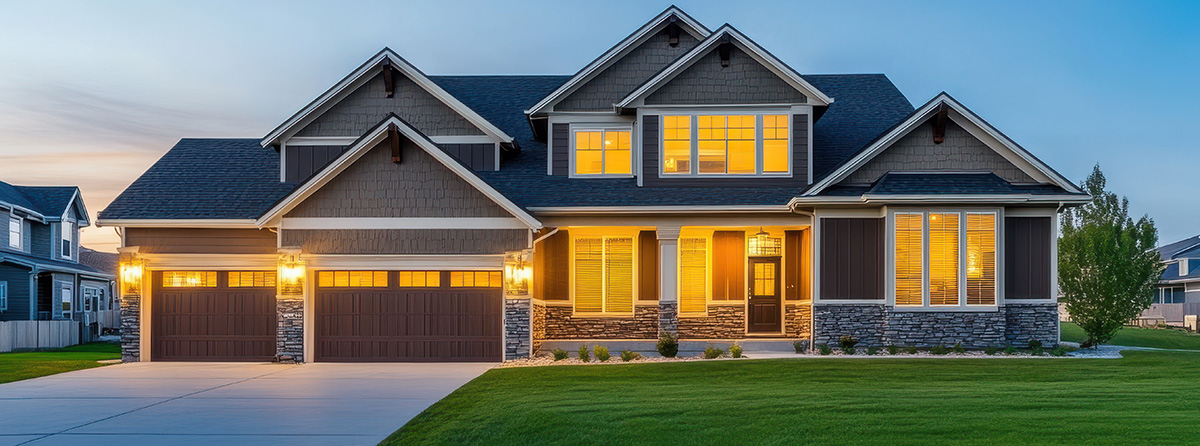
Drive any cul-de-sac on a Saturday and every third garage door is up. That's the only time most people see somebody else's concrete floor, and it's usually the moment they start thinking about their own. Gray dust in the corners. Two dark tire paths. A patch of coating lifting near the door like a bad sunburn. Whatever's going on with that floor, you can read it from the street.
Polishing is what we do instead of putting something new on top. Diamonds, in sequence, cutting the slab flatter and tighter with each pass, and a chemical hardener soaking in partway through. Nothing gets added, so nothing can peel. We polish garages, basements, shops, and small commercial spaces around Arvada, and the conversation always starts with what your floor looks like today.
Dust is the first. If a floor sheds fine gray powder that shows up on shoes, on boxes, and on the bottom six inches of everything stored in there, the paste at the surface has gone soft and is giving itself away a little at a time. Sweeping makes it worse. That floor is the best candidate there is, because hardener plus diamonds solves exactly that problem for good.
Second is a coating letting go. Epoxy and the roll-on garage kits fail from the bottom up, usually near the door where snowmelt sits. Third is discoloration in the tire paths, which is either hot tire pickup peeling a coating or road grime driven down into open pores. Fourth is the one nobody notices until we point at it: a floor that gets mopped and still looks dirty. Porous concrete holds soil below the surface where no mop reaches. Grinding gets it out, because we take that whole layer off.
| Level | How it looks | How it behaves day to day |
|---|---|---|
| Ground and hardened, no polish | Flat matte, aggregate showing where we cut | Cheapest to get and hardest to keep uniform. Right for shops and storage bays |
| Honed, low sheen | Soft satin with no reflection | Hides dust and footprints better than anything above it. Our default in a garage |
| Semi-polished, medium gloss | Light bounces off it without a mirror image | Where most basements land. Shows a footprint near a window, wipes right off |
| High polish | Reflective enough to see the light fixtures in | Beautiful, and it reports every speck. Best in low-traffic interior rooms |
A polished floor gets its durability from chemistry, not from shine. Partway through the grit sequence we flood the slab with a densifier, a liquid silicate that reacts with free lime in the concrete and grows hard crystal down inside the pores. That reaction is what stops the dusting permanently, and it's why a polished floor keeps getting tougher rather than wearing thin. Leave it out and you have a shiny soft floor that goes dull in the traffic lanes inside a year.
The grit sequence itself is just discipline. Metal-bond diamonds first, opening the surface, then progressively finer resin steps, each one erasing the scratch pattern the last one left behind. There's no skipping ahead. Coarse scratches telegraph through a high gloss forever, and the only remedy is going back and running the sequence properly. When a floor comes out cloudy or streaky, that's almost always what happened to it.
One wide shot with the door up tells us most of what we need to know about your floor. Call (303) 569-4046.
People ask us to polish patios and driveways every summer and the answer is always no. A polished surface is dense and slick when wet, freeze-thaw goes after a hard smooth exterior surface faster than a textured one, and our sun does no favors to anything glossy. Outside you want grip. Inside, where a floor stays dry and nobody is shoveling it, polish is the longest-lived floor you can own.
Because this is interior work, our calendar runs opposite the rest of the year. Winter is prime time. The outdoor pour schedule goes quiet, the crew has room, and a basement floor does not care what the sky is doing. The one cold-weather variable is the garage door: grinding needs airflow and vacuum, so we'll want to open up for stretches at a time, and we plan the days around when you can live with that.
The housing mix here sends us in two directions. Basements out toward Candelas and Leyden Rock are usually flat, clean slabs poured over vapor barrier, and they come up quickly. In the established neighborhoods around Olde Town, we're often working on an older floor with patches, a drain, and a history, and those take more passes and finish with more character. Both look good. They don't look the same, and we'll show you what to expect before the first machine comes off the trailer.
Still unsure about something?
Call the crew at (303) 569-4046 and we will talk it through.
Get a free, no-obligation estimate from a crew that knows Colorado soil, Colorado weather, and how to finish concrete that lasts.
Accessibility
Adjust the site to fit how you read and browse. Your choices are saved on this device.