
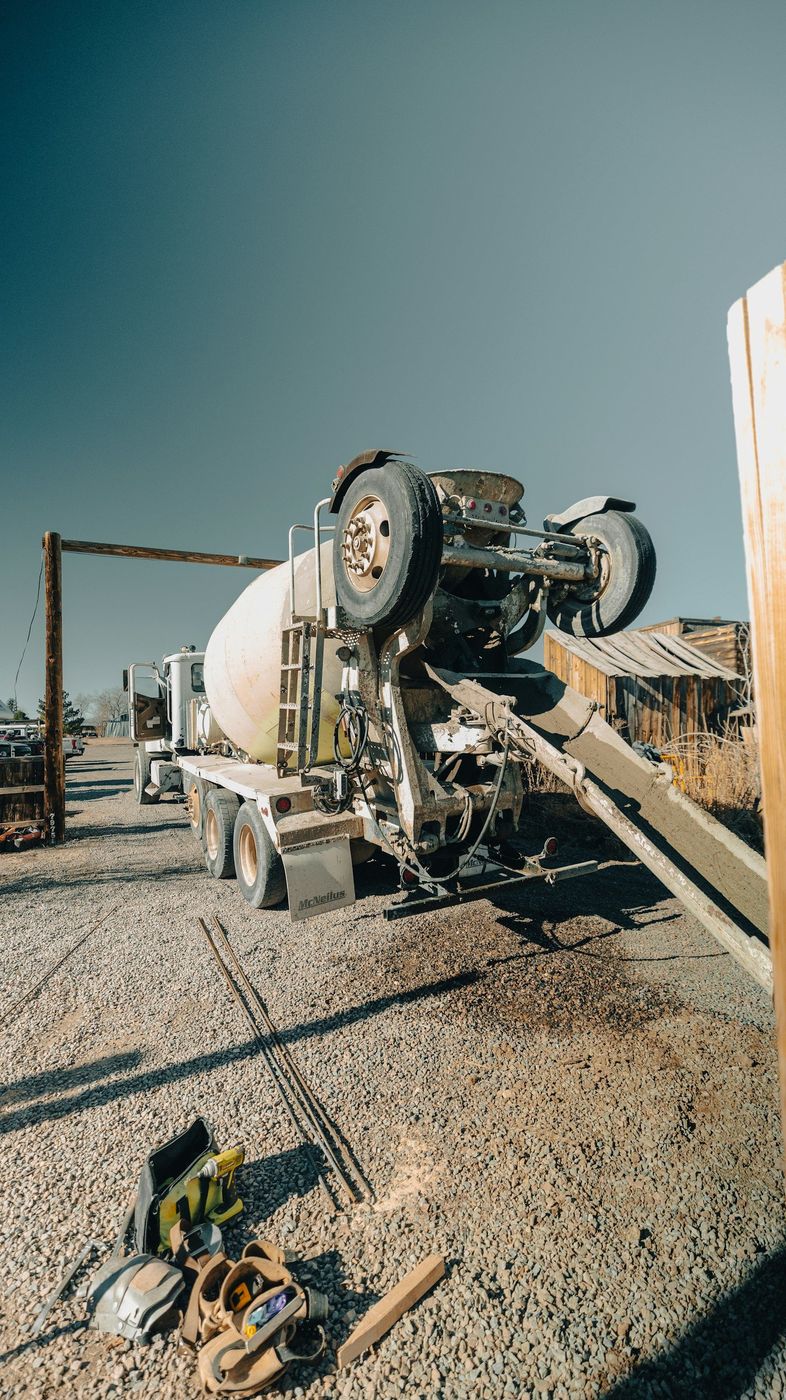
In the second week of March one corner of your yard is mud and another is still frozen. Your pergola stands on both.
Pick a warm afternoon in early March and walk your yard. The open lawn on the sunny side is soft and squelching. Ten steps into the shadow of the house, the ground still rings under a boot heel. Same property, same day, two different soil conditions, and that gap holds for weeks.
Now put a shade structure across both. Four posts, one rigid frame, each post in ground that thaws on its own schedule. That is why pergolas here go out of square without anybody touching them, and why we design the footing package around where each post lands rather than repeating one detail four times. We drill these across Westminster, from the older yards near The Ranch and Quail Creek to the tighter lots in Bradburn and Legacy Ridge.
Most people picture frost heave as something happening under the bottom of a footing. That happens. The meaner version around here grabs the shaft. Freezing soil bonds to the sides of a pier, and when that frozen block lifts it tries to carry the pier with it. A short, wide, rough footing gives that grip plenty to hold. A deeper pier anchored well below the frozen zone has to be pulled apart before it moves, and it usually wins.
Water decides how hard the fight gets. Dry soil freezes and does very little. Wet soil freezes, forms ice lenses, and expands with real force. So the post standing in a splash zone, or under a roof valley, or at the low corner of the yard, is the one that goes up. And it is the one nobody suspects, because nothing about a pergola feels heavy enough to be a foundation problem.
We ask where each post lands and we walk it before quoting. A post in open lawn on the south side lives an easy life. A post set against the shaded north wall sits in ground that stays frozen after everything else has let go, and it will still be locked up when the sunny corner has started moving. That difference, post to post, is what racks a frame.
Then the roof. If snow slides off a slope onto one corner of the structure, that corner takes a load and a pile of meltwater at the same time, all winter. If a downspout empties near a post, the ground under it enters every freeze saturated. We would rather move a downspout and add drainage than drill deeper and hope.
| Post location | What happens there in a freeze and thaw week | How the footing answers |
|---|---|---|
| Open lawn, south exposure | Thaws first, dries fastest, cycles the most times per winter | Standard depth below frost, top crowned so water runs off |
| North side, shaded by the house | Stays locked up weeks after the rest of the yard has moved | Depth, plus a smooth shaft so freezing soil has less to grip |
| Under a downspout or splash zone | Enters every freeze saturated, so heave is at its strongest | Move the water first, then a deeper pier with drainage around it |
| Where roof snow slides off | Impact load, then a mound of meltwater in the same spot for months | Deeper pier, more steel, and a base held well above finished grade |
| At the edge of a patio or walk | Snow gets piled there and melts into the joint all winter | Isolate the pier from the flatwork and seal the joint against water |
We will look at where the posts land, what the water is doing, and price the holes honestly. (303) 569-4046.
Fall is the quiet best season. The clay is dry, holes stand open, and a rig crosses a lawn without leaving scars that show all summer. Set footings in October and the concrete has months of curing before anything bolts to it, so the structure goes up in spring on bearing that is fully ready. Late spring works too, once the ground has drained.
Winter is workable. Frozen crust gets cut through, the bottom of the hole has to be unfrozen bearing, and the concrete gets hot water and cover so it gains strength instead of freezing. What we will not do is leave a hole open overnight in the cold. It fills with water and ice, and yesterday's bottom is not the one you would pour on today.
One more piece of timing. Order the structure before we drill, or at least have the post spacing on paper. Kit dimensions vary, and moving a pier afterward means drilling a new one beside a perfectly good one you already paid for.
Still unsure about something?
Call the crew at (303) 569-4046 and we will talk it through.
Get a free, no-obligation estimate from a crew that knows Colorado soil, Colorado weather, and how to finish concrete that lasts.
Accessibility
Adjust the site to fit how you read and browse. Your choices are saved on this device.