
Three quotes, three materials, and only one of them lets you decide what shape the hole is.
Most people start a pool project comparing prices and finish the week comparing materials, because those turn out to be the same conversation. A molded fiberglass shell, a vinyl liner over a supported frame, and a concrete shell are three genuinely different products that happen to hold the same water.
We build the concrete kind, and we'll still tell you when one of the others is the smarter buy for your yard. What follows is the honest version of that comparison, plus what actually goes into a shell if you decide concrete is worth it. Because the reason to choose it isn't durability alone. It's control over shape, depth, and everything you want to attach to the pool later.
A concrete pool is built to the hole, not delivered to it. That means the shape follows your yard rather than the other way around, which matters enormously on the tighter lots newer neighborhoods bring and on the awkward slopes we run into on older properties near The Ranch and Quail Creek.
Depth is yours to pick too. A tanning ledge, a genuine deep end, a swim-out bench, steps where you actually want them, a spa spilling into the main body: all of it is formed and shot in place. A raised bond beam, a sheer descent wall, or a vanishing edge needs a monolithic structure to hang on.
What it costs you is time and patience. There's excavation, steel, shell placement, cure, tile and coping, deck, and interior finish, each with its own crew. It's the longest build of the three, and the least forgiving of decisions changed halfway through.
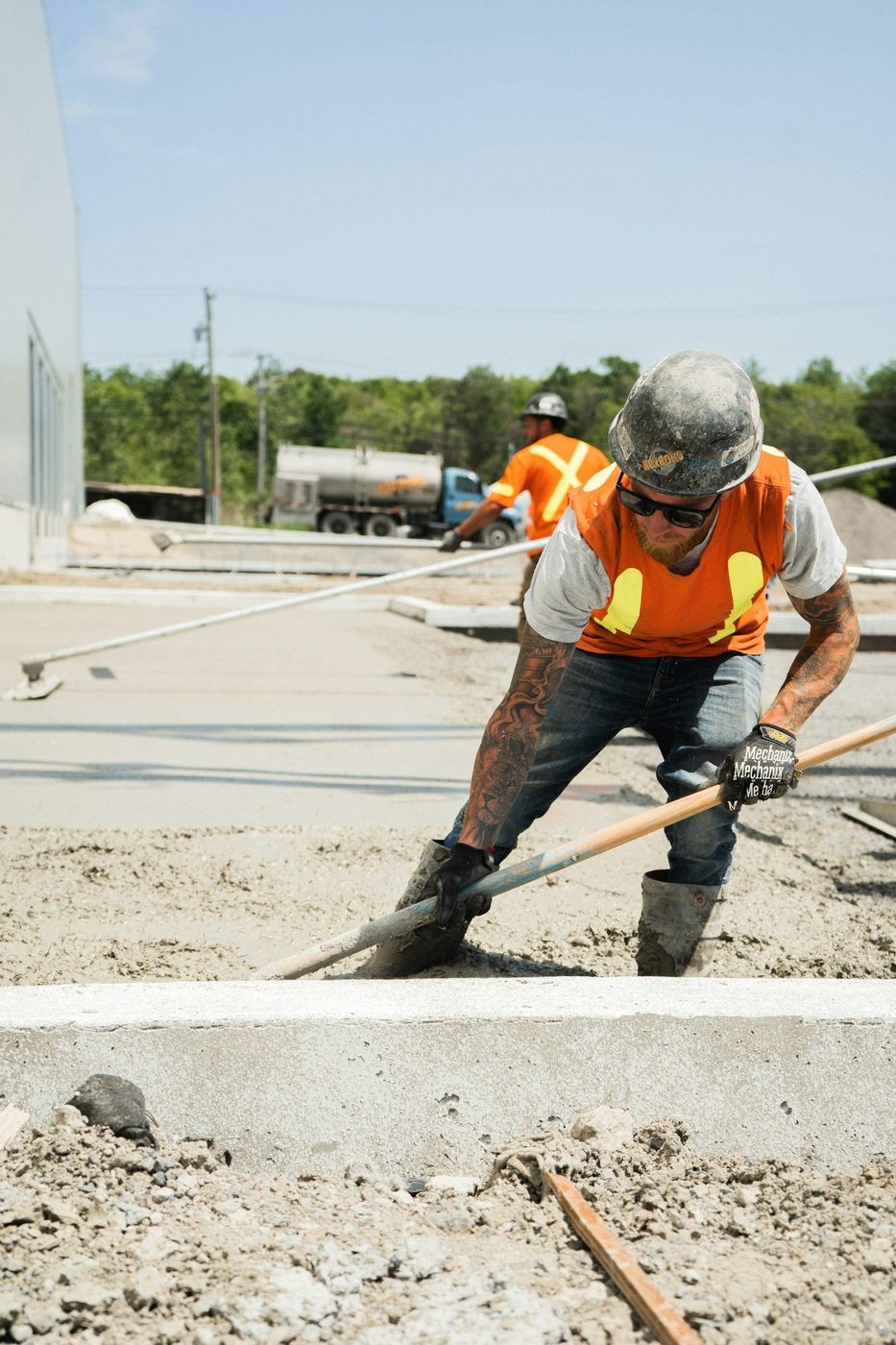
Shotcrete is the common method and for good reason. Steel gets tied into a continuous cage against the excavated shape, then concrete is pneumatically placed against it, compacting as it goes. Curves, benches, and varying wall thickness all come naturally, and there's no forming to strip on the pool side. It takes a nozzle operator who knows what they're doing, since the whole quality question lives in placement technique and in whether rebound is being cut away rather than buried.
Cast-in-place shows up where the geometry is severe or the engineering asks for it: tall straight walls, structural conditions on a slope, or a pool that doubles as a retaining structure. It means two-sided forms, bracing against real pressure, and vibration in lifts. More labor, more control.
Either way the shell gets designed rather than guessed. Our in-house structural engineer looks at the soil conditions, the wall heights, and what's uphill of the excavation before anyone ties the first bar. On a vessel that has to hold thousands of gallons for decades, that's not paperwork.
| Concrete shell | Fiberglass | Vinyl liner | |
|---|---|---|---|
| Shape and depth | Anything you can draw and engineer | Whatever the mold offers | Rectilinear shapes within panel limits |
| Getting it into the yard | Trucks, hose, and crews | A crane and clear access for a large shell | Panels carried in, easier on tight lots |
| Build time | Longest of the three | Fastest once the hole is ready | Middle of the pack |
| Attachments and features | Ledges, walls, raised spa, vanishing edge | Only what the mold includes | Limited, mostly at the deck |
| What wears out | Interior finish, on a long cycle | Gel coat, eventually | The liner, on a shorter schedule |
| Where it fits best | Custom yards and long-term ownership | Simple plans and fast timelines | Tight budgets and straightforward shapes |
Send them over. We'll walk through what each includes structurally, without pitching ours.
Spring and summer are the obvious seasons and the crowded ones. Booking a spring start usually means talking in the fall, which is also our favorite time to dig. Ground conditions are stable, the shell has mild weather to cure in, and the finish work lands before the following swim season instead of during it.
Shell placement in genuinely cold weather can be done with heated mix water, non-chloride accelerators, and blankets, and frozen subgrade is where we stop. Curing is the part people underestimate: a fresh shell wants to stay wet, and at this elevation, in this dry air, that means active watering rather than hoping for humidity.
Summer brings the opposite risk. Afternoon storms roll off the plains fast, and a hard rain on a shell being finished, or on fresh deck concrete, is a real problem. We start early, keep cover ready, and would rather move a day than fight the sky.
Still unsure about something?
Call the crew at (303) 569-4046 and we will talk it through.

Get a free, no-obligation estimate from a crew that knows Colorado soil, Colorado weather, and how to finish concrete that lasts.
Accessibility
Adjust the site to fit how you read and browse. Your choices are saved on this device.