
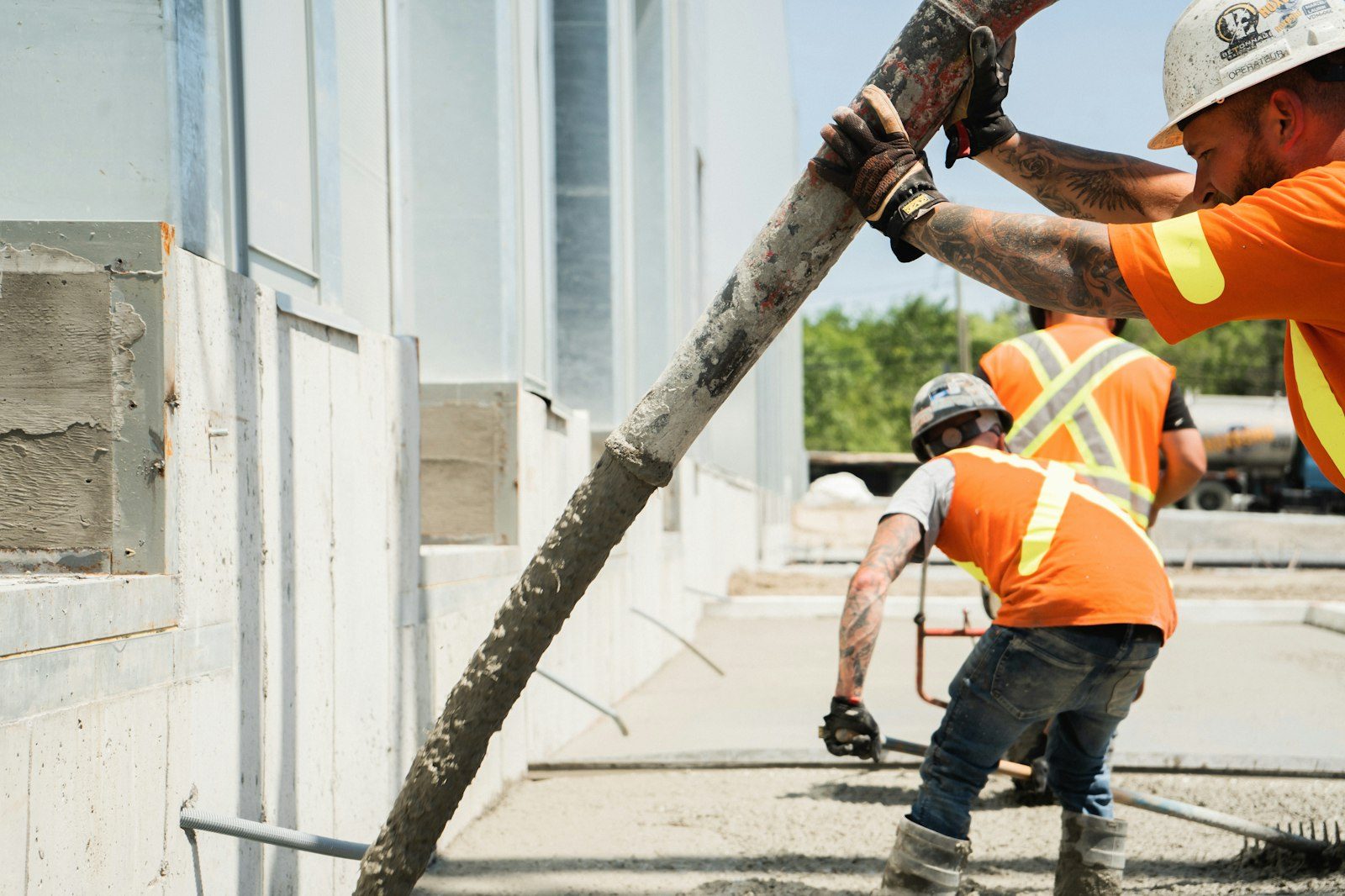
A cheap pond and a good pond look identical the week they're finished. Year three is when they stop looking alike.
Water features are one of the few things we build where the expensive decisions are completely invisible when the job is done. Nobody sees the waterstop. Nobody sees whether the steel was lapped through the corners or simply stopped there. Nobody sees how many days the shell stayed wet while it cured.
What people do see, eventually, is a water level that keeps dropping and a stain creeping down the outside of a wall. So when we price a pond in Westminster, we're mostly pricing the parts that never show. Here's where the money actually goes, and which parts earn their keep.
Excavation comes first and it's less predictable than anything else. A hole in workable ground is a morning. A hole that turns up saturated soil, old fill, or a utility nobody marked becomes a different conversation, which is why we walk the site before quoting rather than pricing off a sketch. Yards around Quail Creek and newer lots near Bradburn both send us feature calls, and the digging is where they differ most.
Then wall height and water depth. Those two drive everything structural. A shallow ornamental basin and a four-foot-deep koi pond are not the same build, because deeper water pushes harder on the walls and the steel and thickness have to answer that.
After that it's detail work and labor. Penetrations, plumbing, the waterstop, the joint prep at the base of the walls, and the wet cure. None of it is expensive in materials. All of it is time. And a pond that skipped those items didn't save you money, it just moved the cost to a future season when the repair means draining, chipping, and guessing.
| The choice | The cheaper path | What the added spend buys |
|---|---|---|
| Size and depth | Shallow, small footprint | Real depth for fish, stable temperature, and better water chemistry |
| Shell construction | Thin walls, minimum steel | A structure that ignores frost pressure and ground movement |
| The floor-to-wall joint | Concrete on concrete, nothing between | A waterstop, which prevents the most common leak in this trade |
| Plumbing | Flexible line laid in and covered | Sleeved, sloped, pressure-tested runs you can service later |
| Filtration and circulation | A pump sized to the brochure | Turnover matched to the volume, which decides how clear it runs |
| Edge treatment | Stone set on the finished rim | A detailed coping edge that hides the liner line and stays put |
Almost every pond is two pours, floor first and walls afterward, so a horizontal seam runs around the base of every wall. That seam is where leaks start. We set a waterstop in it, either a swelling strip or a formed profile, and we clean and roughen the top of the floor slab before the wall concrete lands on it. Concrete placed onto a dusty slab bonds to dust.
Steel gets lapped through the corners rather than stopping at them, because a wall under water pressure wants to open exactly there. Vertical bars stand out of the floor tall enough to tie into the wall mat, so the finished shell behaves like one box.
Then the cure. Concrete in this dry air, at this elevation, will pull moisture out of itself and craze if you let it. A shell meant to be watertight gets kept wet for a week. That's the least glamorous line on any estimate and one of the most valuable.
Send them to us. We'll show you which line items one of them left out, and you can decide what that's worth.
Late spring through early fall is the build window here. June and September are the sweet spots: warm enough for a good cure, cool enough that the shell isn't drying faster than we can wet it. A pond built then has months of settled weather before it faces its first freeze.
Winter isn't a construction season for water features. Frozen subgrade stops floor work outright, and cold slows the cure on a structure that has to be sound. It is, however, a good design season. Layout, plumbing routes, and pricing done in January means digging the first workable week of spring, which is worth real money compared to joining the queue in May.
One weather note specific to summer here: the storms that build over the plains in the afternoon can dump on a floor being finished, and rain during finishing leaves a weak, dusty surface. In a vessel meant to be watertight, that's unacceptable, so we place early and cover fast.
Still unsure about something?
Call the crew at (303) 569-4046 and we will talk it through.
Get a free, no-obligation estimate from a crew that knows Colorado soil, Colorado weather, and how to finish concrete that lasts.
Accessibility
Adjust the site to fit how you read and browse. Your choices are saved on this device.