
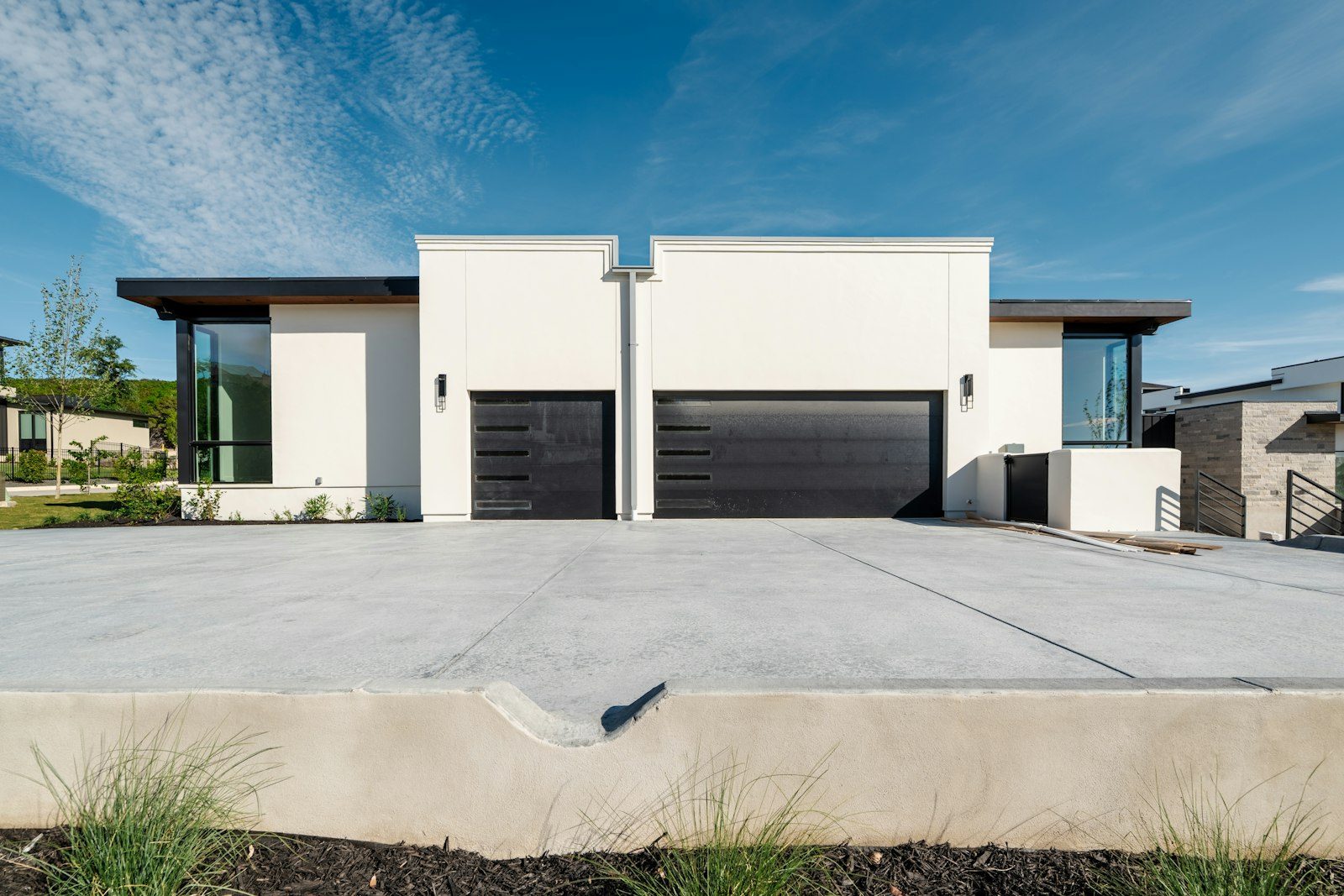
A driveway quote is six decisions stacked together. Here's what each one buys you.
Ask three crews to price the same driveway and you'll get three numbers that refuse to line up. Nobody is guessing. A drive is six or seven separate decisions stacked on each other, from how deep we dig to what steel goes in to how the apron meets the street, and a one-line bid never says which version you're getting. So we say it out loud.
We pour across Thornton, on the newer lots going in north of town and on the established homes around Eastlake where the original slab has finally quit. Adams County clay is behind most of the cracking we get called about, and the answer is nearly always drainage and base rather than a prettier surface. That one sentence explains our pricing better than anything else on this page.
Look at a finished driveway and you're looking at maybe fifteen percent of what you paid for. The rest is buried. Excavation depth, how much soft dirt came out and got replaced, whether the base went down in lifts and got a plate or a roller on each one, how much steel is tied in there and whether it's sitting on chairs or lying in the dirt. None of that shows in a photo. All of it decides year twelve.
That's the uncomfortable thing about buying concrete. The cheapest bid and the best bid look identical the week they're finished. They stop looking identical after about four winters, when one of them starts stepping at the joints and the other doesn't. We'd rather lose a job explaining base depth than win one by skipping it. So when you compare bids, ignore the finish for a minute and ask what depth they're digging to, what goes back in the hole, and how it gets compacted.
| Upgrade | Our take | What it buys you |
|---|---|---|
| Deeper compacted base | Push for it every time | The biggest single factor in whether the slab is flat in fifteen years |
| Tied rebar over mesh | Push for it on this soil | Hairline cracks that stay tight and panels that don't step apart |
| Four inches up to six | Only where the weight is | Real value under a truck or the turn-in. Wasted across the whole slab |
| Widening for a third car | Worth it while the forms are out | Later means a cold seam and a second mobilization |
| Stamped or colored surface | Buy it because you want it | Looks, not life. Reseal every couple of years and repairs cost more |
| Radiant heat below the slab | Rarely, and only on a steep approach | Ends the shoveling problem on the one grade where shoveling is miserable |
| Sealer in year one | Skip it, then talk to us | New concrete needs to breathe out. Sealing early traps water in the surface |
Pouring on top of the old slab. It sounds efficient and it's a disaster. Whatever broke the first driveway is still down there working, and now there's a bond line for water to sit in. We tear out. Always.
Thinning the concrete to buy a bigger footprint. People do this because square footage is easy to picture and inches are not. A smaller drive at full depth beats a sprawling one at three inches, and it isn't close.
Letting the finish carry the budget. We've demolished gorgeous stamped drives with no steel and no base under them. Spend down, not up. If money is left over, then talk pattern and color.
We'll measure, check your grade, and hand you a written breakdown you can compare against anybody. Free. (303) 569-4046.
Late April into mid-October is the easy stretch, and September is our favorite: warm enough to finish comfortably, cool enough that the surface isn't setting under us, with weeks of curing weather before the first hard freeze. Spring works once overnight lows quit dipping below freezing and the subgrade dries enough to compact. Wet clay won't take a plate, so a rainy April pushes everybody's calendar right.
Summer pours are normal. We start at first light and carry plastic on the truck, because rain hitting a slab we're still finishing is the one thing that genuinely wrecks a surface.
Winter work costs more and it isn't a scam. Heated mix water, an accelerator without chloride, blankets over everything, and a much shorter window between fronts. That's real labor and real material. What we won't do at any price is place concrete on frozen subgrade.
Still unsure about something?
Call the crew at (303) 569-4046 and we will talk it through.

Get a free, no-obligation estimate from a crew that knows Colorado soil, Colorado weather, and how to finish concrete that lasts.
Accessibility
Adjust the site to fit how you read and browse. Your choices are saved on this device.