
(303) 569-4046 Serving Denver & the Front Range Licensed, Bonded & Insured
Go Denver Concrete
Pool Decks in Larkspur, Colorado
Larkspur, Douglas County

Larkspur Pool Deck Contractors

Traction underfoot, a real joint at the coping, and water that leaves the deck instead of sitting on it.

Larkspur is not pool country in the way a flat suburb with quarter-acre lots is pool country. The pools out here belong to custom homes on acreage, tucked into a clearing or set on a graded bench with a view of trees in every direction. There aren't many, and the ones that exist are a real investment, which changes how we approach the concrete around them.

The other thing that changes it: the swim season at 6,720 feet is short and honest about it. Most of the year that deck is a patio. It carries chairs, boots, snow shovels, a fire pit, and holiday traffic far more hours than it ever carries wet feet. We build for both jobs, because a surface designed only for August is a surface you'll be unhappy with from October through May.

What we find on the decks already out here

The older housing in Sage Port includes homes from an era when a smooth steel-trowel finish read as high quality, and around water that's the wrong call. Those decks are slick when wet, and by now most of them have surface wear, tight cracking, and a coping line that's been pried at by twenty winters of ice. Some are excellent candidates for resurfacing. Some are past it.

Estate lots in Perry Park bring a different set of problems, mostly mature. Roots, settled sections where irrigation has run for decades, and grade that has quietly shifted so runoff now drains toward the shell instead of away from it. Newer construction out at Bear Dance is generally sound, and when we get calls there it's usually to extend a deck, add a spa surround, or fix a builder detail like a missing expansion joint at the coping.

The two details that decide whether a pool deck lasts

First: the joint where deck meets coping. Shell and deck are separate structures moving at different rates, and bonding them rigidly means something has to give. Usually the coping tile or the bond beam, which is the expensive end of that trade. We hold a compressible expansion joint at that line and seal it with a flexible material rated for chlorine and sunlight. Treat it as maintenance, not a one-time item.

Second: where the water goes. Deck runoff carries chemicals, and it should never drain back into the pool or pond toward the house. We build a steady fall away from the water at roughly a quarter inch per foot, and where grade fights us, which happens plenty on a benched hillside lot, deck drains go in and get piped somewhere sensible. Standing water at this altitude becomes ice, and ice beside a pool is how people get hurt.

Deck finishes ranked for wet-foot traction

What each surface gives you barefoot, and what it costs you the rest of the year
FinishTraction when wetThe trade-off
Broom finishExcellent, and the honest defaultPlain next to a custom home, though color fixes most of that
Exposed aggregateExcellent, with the stone doing the workRough on bare feet and knees, and it traps pine needles
Textured overlay with gritVery good, and it can be tuned to the level you wantNeeds a sound substrate underneath and a resealing habit
Light salt or sand finishGood, gentler underfoot than aggregateSmall pockets can hold water and grit that needs sweeping out
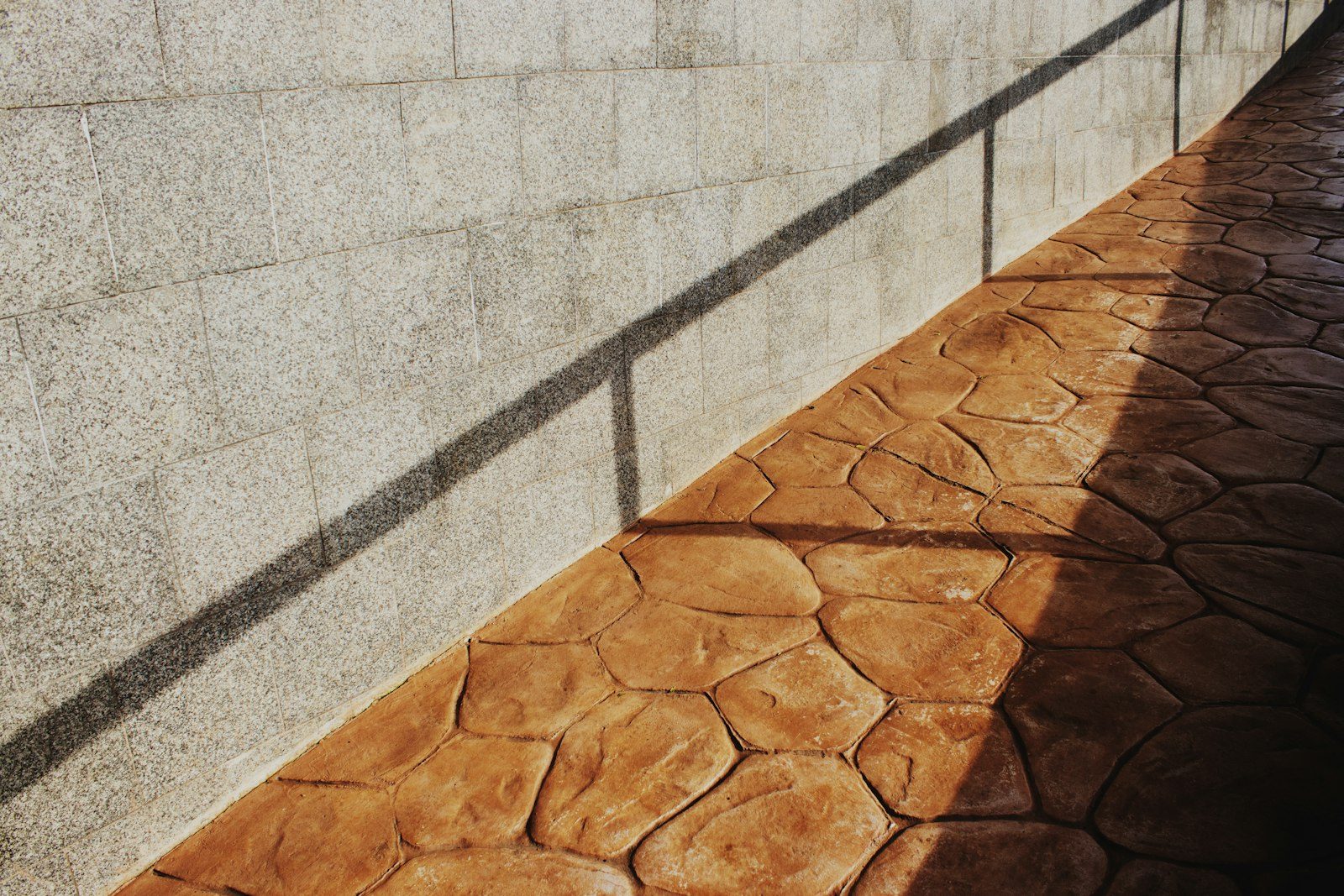
Stamped with a matte sealerFair, and only with a slip additive worked into the sealerPattern grout lines trap debris, and it wants resealing every two to three years
Smooth trowelPoor. We won't pour it around waterLooks sharp dry, dangerous wet, and it will not get safer with age
1/4"per foot of fall away from the water
1/2"compressible joint at the coping line
4,000 PSIair-entrained mix, no exceptions
9 monthsa year it's a patio, not a pool deck
Deck slick, cracked, or draining the wrong way?

We'll walk it, check the coping joint and the fall, then tell you whether this is a resurface or a rebuild.

What goes into a deck we pour

  • Compacted base under the whole footprint, especially the backfill ring around the shell
  • Number 4 rebar on chairs, kept clear of the bond beam so the two structures stay independent
  • Air-entrained 4,000 PSI mix, because freeze-thaw and pool water are a hard pair
  • Consistent fall away from the water, verified with a level rather than eyeballed
  • Deck drains and piping where grade alone can't carry the water off
  • Compressible expansion joint at the coping, sealed with a chlorine-rated flexible material
  • Control joints sawed the same day, laid out to follow the deck shape instead of cutting across it
  • Slip-resistant finish chosen with you, and a sealer that doesn't turn glossy
Larkspur Pool Decks

Pool Decks in Larkspur

Still unsure about something?

Call the crew at (303) 569-4046 and we will talk it through.

Because the pool and the deck are two different structures sitting on two different things. The shell is rigid and founded deep. The deck rides on backfill and soil that moves with moisture and frost. Bond them together and the weakest element cracks, which is almost always your coping tile or the top of the bond beam. A compressible joint lets the deck move on its own and keeps the failure from ever starting.

Chlorinated and salt-treated water splashing out day after day is hard on cement paste and hard on sealers, and it will fade color over time. A penetrating sealer suited to pool environments helps, and it wants renewing more often than a plain patio would. The bigger threat is what people put down in winter. Deicing chemicals on a pool deck are off the table completely, magnesium chloride most of all. Sand, shovel, done.

Depends on what's under the surface. If the slab is sound, drains correctly, and the problem is texture, wear, or dated color, a bonded overlay gives you a new surface for a fraction of a rebuild and we'd recommend it. If it has settled, if panels move, if water runs toward the shell, or if the base washed out around the pool, an overlay just puts a fresh face on a failing slab. We'll tell you which one you have before you spend anything.

Late spring through early fall, and shoulder seasons are actually the smart booking since the pool is closed anyway and you lose nothing. Summer pours run early to stay ahead of the afternoon storms that build over the foothills. Cold-weather deck work is possible with heated water and blankets, but frozen ground stops us, and nobody wants to be finishing concrete in the wind at this elevation in November.

Usually, with planning. We protect the shell, the coping, and any tile before a machine or a wheelbarrow comes near it, and on tight sites we'll pump the pour rather than drive a heavy truck across a lawn or over a septic field. Tell us about the gate widths, the slope, and where the utilities run, and we'll build the plan around what the property allows.

Sometimes. If the low area is localized and the slab is otherwise solid, lifting the panel back to grade or adding a drain at the low point can solve it. If the whole deck was poured flat, or it pitches back toward the pool, no amount of patching changes the geometry and you're looking at replacement or a self-leveling overlay with real thickness. We shoot grades first so the answer comes from numbers.

Walk on it in a day or two. Furniture, chairs, and normal foot traffic after about a week. Give it the full 28 days before anything heavy crosses it, and hold off on sealing until the concrete has cured properly. If we've poured against a full pool we'll cover the water during finishing and clean up thoroughly, but most people find it easier to schedule this while the pool is down anyway.
Finished concrete project at a Colorado home

Need Pool Decks in Larkspur?

Get a free, no-obligation estimate from a crew that knows Colorado soil, Colorado weather, and how to finish concrete that lasts.