
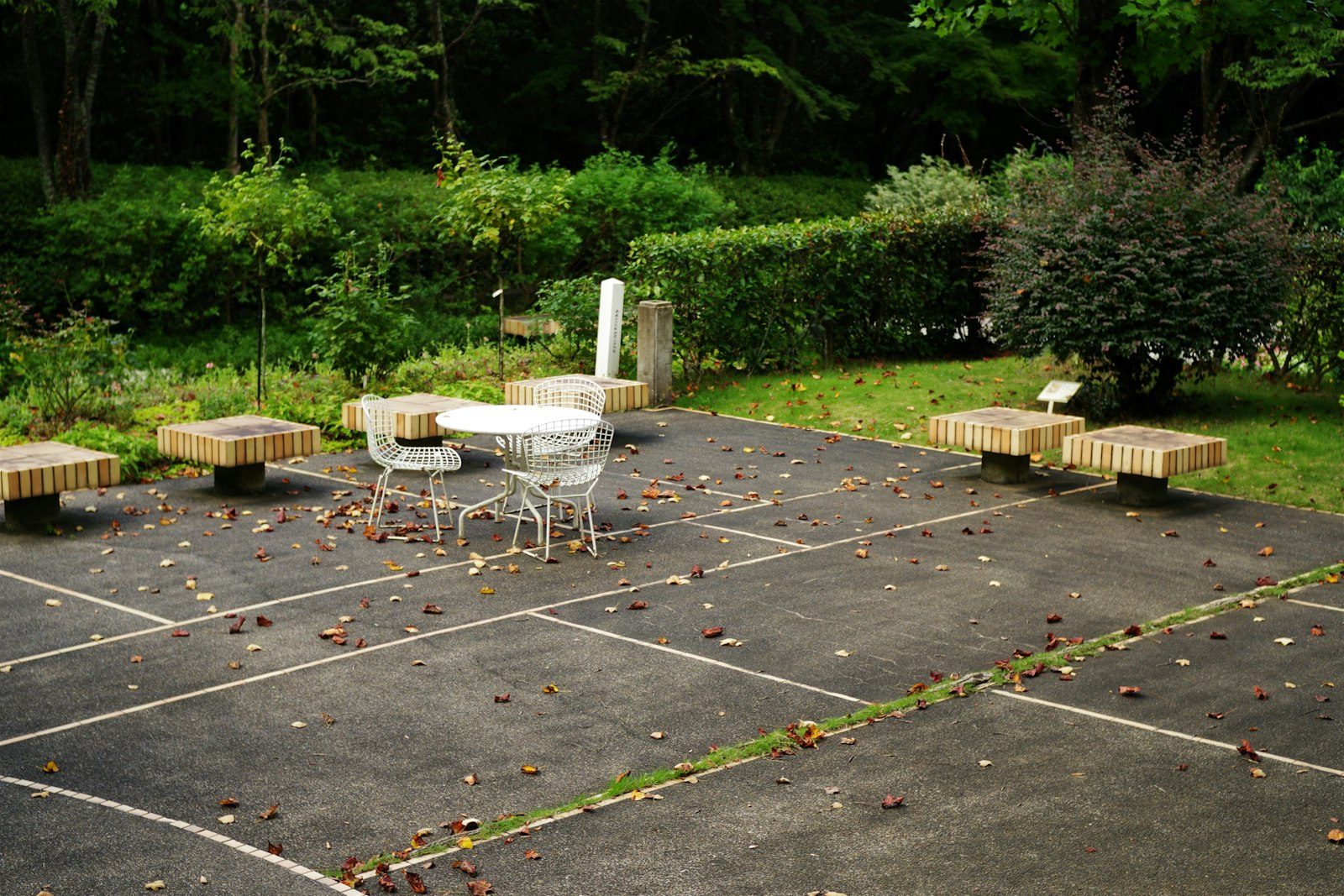
A slab can look bone dry at eight on an October morning and still be far too wet to seal.
Mid-October, first real cold night of the season, and by morning every horizontal surface in the neighborhood has a film of dew on it. By eight the sun is up and the driveway looks dry. It isn't. The surface has flashed off and the pores underneath are still holding water, and that water is exactly what stands between a sealer that soaks in and one that sits on top blushing white by Thanksgiving.
This is the mistake we get called to fix more than any other, and it's usually a well-meaning weekend project. Somebody picked a beautiful fall Saturday, waited until the slab stopped looking damp, and rolled sealer on at nine in the morning. Two weeks later the driveway has a cloudy haze across half of it. The product wasn't the problem. The timing was.
Fall is the best sealing stretch we get on the Front Range, and it's a narrower window than people assume. Daytime highs in the fifties and sixties, low humidity, and a slab that's had a dry week behind it. Sealer cures evenly instead of flashing, and the coating has time to harden before the first snow sits on it. That's the target.
The catch is the mornings. Overnight cooling at this elevation drops surface temperatures well below air temperature, and dew condenses right into the pores. So we start later than people expect, usually late morning once the slab has warmed and given up its moisture, and we finish with enough daylight left for the coating to set before the temperature drops again. On a short October day that's a few hours, not a full shift.
Summer has the opposite problem. A slab in direct July sun runs hot enough that solvent flashes off before the resin levels, leaving lap marks and a rough texture. Summer sealing means early morning on the shaded side, then following the shade around the property.
| What we're looking at | How we check it | Go or wait |
|---|---|---|
| Dew overnight, sunny morning | Tape a square of plastic down for an hour. Condensation underneath means moisture is still rising | Wait. Late morning usually solves it on its own |
| Rain two days ago, dry and warm since | Same plastic test, plus a look at the shaded north edge of the slab | Go, once the shaded side reads dry too |
| Concrete placed last week | Nothing to test. Fresh concrete gives off water for weeks | Wait. Penetrating sealer at 28 days, film-forming later than that |
| Pressure washed yesterday | Water driven into the pores under pressure leaves slower than rain does | Wait a full extra day, and longer on the shaded half |
| Cold morning, slab reading under 50 | Infrared gun on the concrete, not a look at the air temperature | Wait for the slab. The forecast is not the surface |
| Irrigation running on a timer | Look for the overspray line along the slab edge | Shut the zone down the day before, or you're sealing a wet stripe |
Check it in the morning. If there's water on the underside, your slab isn't ready, and now you know why last time went wrong. Call (303) 569-4046.
Half the failed seal jobs I look at were done by somebody who did everything right except wait. Product was fine. Prep was fine. The slab was wet, and concrete doesn't care how good your intentions were.
Our crew lead, after the walkthrough
Two families, two jobs. A penetrating sealer, silane or siloxane, soaks into the concrete and lines the pores from the inside. Nothing sits on the surface, so it can't peel, it doesn't change traction, and it doesn't make the slab look wet. That's what we put on driveways, sidewalks, and any north-facing slab that spends winter under a snow pile. It's the workhorse.
A film-forming sealer, usually acrylic, lays a thin coating over the top. It brings out color, darkens the surface, and gives stamped and stained work the depth people paid for in the first place. It also wears, so it needs recoating on a cycle. Anything decorative gets this, and anything decorative on the sunny side of a house in Cherry Hills Vista gets it more often than the shaded patio next door.
Older properties in Northwest Englewood and Broadway Estates mostly want the first kind. Plain gray slabs that need water kept out of the pores before another winter's freeze-thaw cycles finish what the last few hundred started. Sealing an old driveway won't make it look new. It slows down the process taking it apart.
Still unsure about something?
Call the crew at (303) 569-4046 and we will talk it through.
Get a free, no-obligation estimate from a crew that knows Colorado soil, Colorado weather, and how to finish concrete that lasts.
Accessibility
Adjust the site to fit how you read and browse. Your choices are saved on this device.