
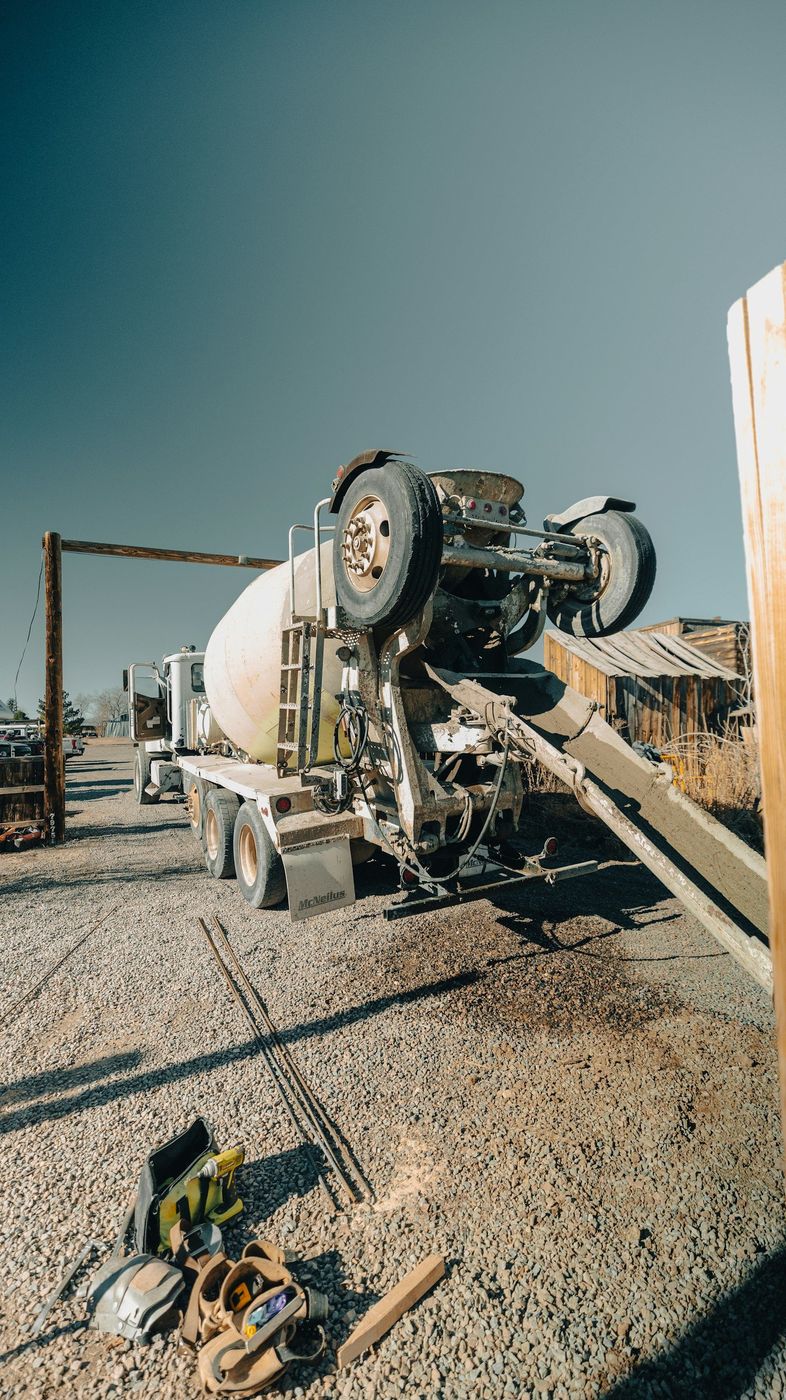
On an access road you are buying dirt work with a concrete lid. Price the dirt wrong and nothing above it matters.
Owners compare access road bids the way they compare flatwork bids, by square footage and thickness, and that's how two numbers four inches apart end up years apart in service life. Concrete is the visible part. It isn't the expensive part, and it's rarely the part that fails first.
We build service drives, equipment routes, yard roads, and fire access lanes for commercial and industrial property around Denver. Some of it is behind older commercial buildings in Berkeley and the Highlands where a gravel service lane has been rutted for a decade. Some is new work on redevelopment parcels near Central Park where a general contractor needs a haul route that survives the whole build and then becomes the permanent road. Different jobs. Same question: what's carrying the load?
Cut a section through a finished access road and the concrete is maybe a third of the story. Below it sits compacted aggregate base, and below that either native soil you can trust or native soil somebody had to fix. The fixing is where budgets swing hardest, and it's what a thin bid quietly leaves out. Undercut and replacement, separation fabric, stabilization of soft subgrade, drying down clay that came in wet: none of it shows in a photo of the finished road.
Here's the value argument in one line. A properly based road at a sensible thickness carries loaded trucks for decades with joint maintenance and nothing else. A thick slab on unprepared subgrade breaks up the first spring the ground saturates, and you pay for the road twice plus demo. We'd rather sell you less concrete over better dirt.
| Driver | Pushes the number up when | Pulls it down when |
|---|---|---|
| Subgrade condition | The proof roll pumps and we're hauling bad material out and good material in | Native soil tests firm and we're only shaping and compacting |
| Design vehicle | Loaded semis, cranes, or refuse trucks set the section and the radii | Pickups, vans, and the occasional box truck are the real traffic |
| Access and staging | Trucks have to shuttle through a live site with a flagger and short windows | The route is open, the site is fenced, and ready-mix can back straight in |
| Length versus width | A short wide apron burns forming and edge work per yard placed | A long continuous run lets us set forms once and place efficiently |
| Drainage work | Culverts, inlets, or a regrade have to happen before the road can go in | Existing fall works and water already leaves the corridor |
| Schedule | Night, weekend, or winter placement with protection and lighting | A normal weekday window in the middle of the pouring season |
Send us both. We'll show you where the sections differ and what the cheaper one left out. No charge and no obligation.
Every access road is designed around a single vehicle, and picking the wrong one is expensive in both directions. Build for a semi you see twice a year and you've overbuilt a mile of road. Build for delivery vans, then let a crane track across it, and you'll be reading crack maps by fall. So we ask what uses the corridor and how often.
Then geometry. Turning radii cost more than width does, because a tight inside corner concentrates steering shear on a small area and that's where surfaces tear first. Widening a curve is cheap during layout and painful afterward. Watch the edges too. Unsupported edge with soft shoulder beside it is the classic access road failure: a tire drifts six inches wide, nothing is under it, and a chunk breaks off. Thickened edges fix that cheaply.
Earthwork drives the calendar more than the pour does. Our best stretch runs late spring through October, and the reason is subgrade moisture as much as air temperature. Clay that came through a wet April won't compact to anything useful until it dries down, so a job that looks like a May pour is often a June pour with three weeks of drying in between. Late summer is our most productive window.
Winter is workable with real limits. We can place with heated water, accelerators, and blankets, but we won't compact base against frozen ground or pour on frost, because both of those unwind the moment the ground thaws. If a general contractor needs a haul route in January, the honest answer is usually a temporary aggregate road now and the permanent concrete section in spring, built on the base you've already paid for.
Still unsure about something?
Call the crew at (303) 569-4046 and we will talk it through.
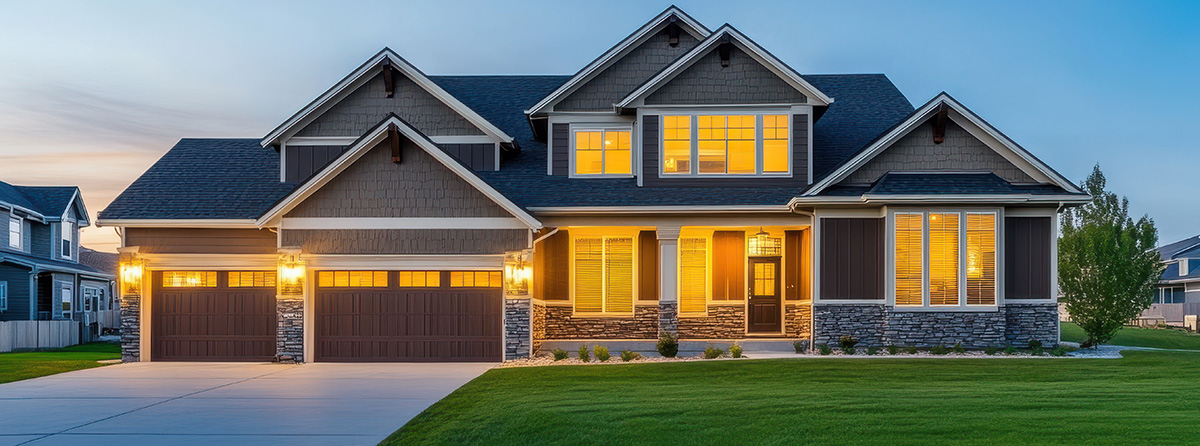
Get a free, no-obligation estimate from a crew that knows Colorado soil, Colorado weather, and how to finish concrete that lasts.
Accessibility
Adjust the site to fit how you read and browse. Your choices are saved on this device.