Pouring A Foundation On Front Range Clay Soil
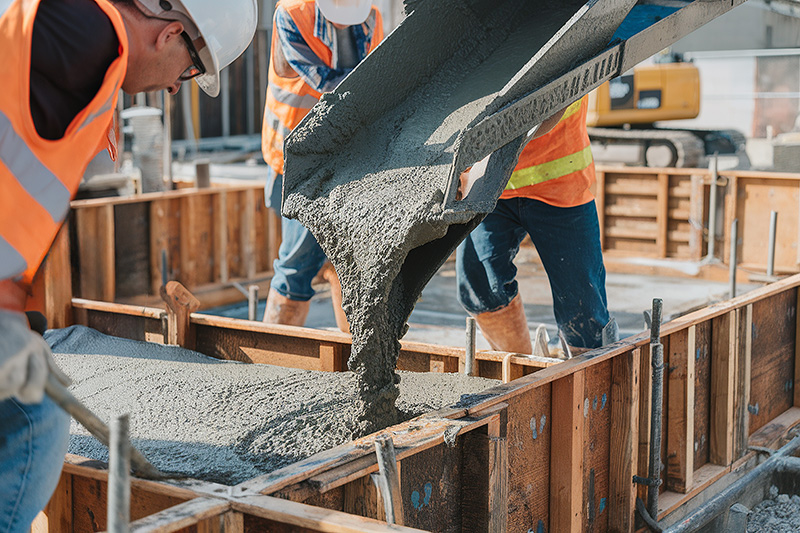
Ask any builder who has worked the Front Range what keeps them up at night, and a lot of them will say the same thing: the soil. Much of the Denver metro and the surrounding foothills sit on expansive clay, and it is the single biggest reason foundations crack, heave, and fail here. Understanding it is the first step to building something that lasts.
What expansive clay does
Expansive soils, often heavy in a clay mineral called bentonite, swell dramatically when they take on water and shrink when they dry out. That is not a small movement. A clay soil can lift with enough force to crack a foundation, push a basement wall inward, or heave a slab upward. Then in a dry spell it shrinks back, and the structure settles. Over years of wet springs and dry winters, that constant up-and-down is what damages foundations that were not designed for it.
Why drainage is half the battle
Water is what activates the clay, so controlling water around a foundation is critical. Gutters and downspouts that dump next to the house, grading that slopes toward the foundation instead of away, and poor drainage all feed water into the soil right where you least want it. A lot of foundation movement traces back to water management, not the concrete itself.
How an engineered foundation resists it
This is exactly why foundation work on the Front Range should be engineered to the soil, not poured to a generic detail. Depending on the site and the soils report, the design might call for deeper footings, drilled piers or caissons that reach down to stable material below the active clay, void spaces that give the soil room to swell without loading the structure, heavier reinforcement, or a structural floor system instead of a slab that sits directly on the clay.
A soils report tells the engineer how reactive the clay is and how to detail the foundation for it. Skipping that step is how foundations end up fighting the soil instead of working with it.
Signs your foundation is moving
Not every crack is an emergency. Thin, hairline shrinkage cracks are normal as concrete cures. The ones to take seriously are horizontal cracks in a basement wall, stair-step cracks in block or brick, doors and windows that suddenly stick, and floors that slope. Those can signal active soil movement, and they are worth a professional look.
The bottom line for your build
You cannot change the soil under your lot, but you can build for it. An engineered design, proper drainage, and a contractor who respects what Front Range clay can do are what separate a foundation that lasts from one that becomes a repair bill. With a structural engineer on staff, that soil-first approach is built into how we pour every foundation.

Written by the Go Denver Concrete crew
We pour residential and commercial concrete across the Front Range, from Colorado Springs to Fort Collins. Licensed, bonded, and insured, with a structural engineer on staff who reviews the foundation and repair work we write about here. Everything in this article comes off our own job sites, not a content mill.