
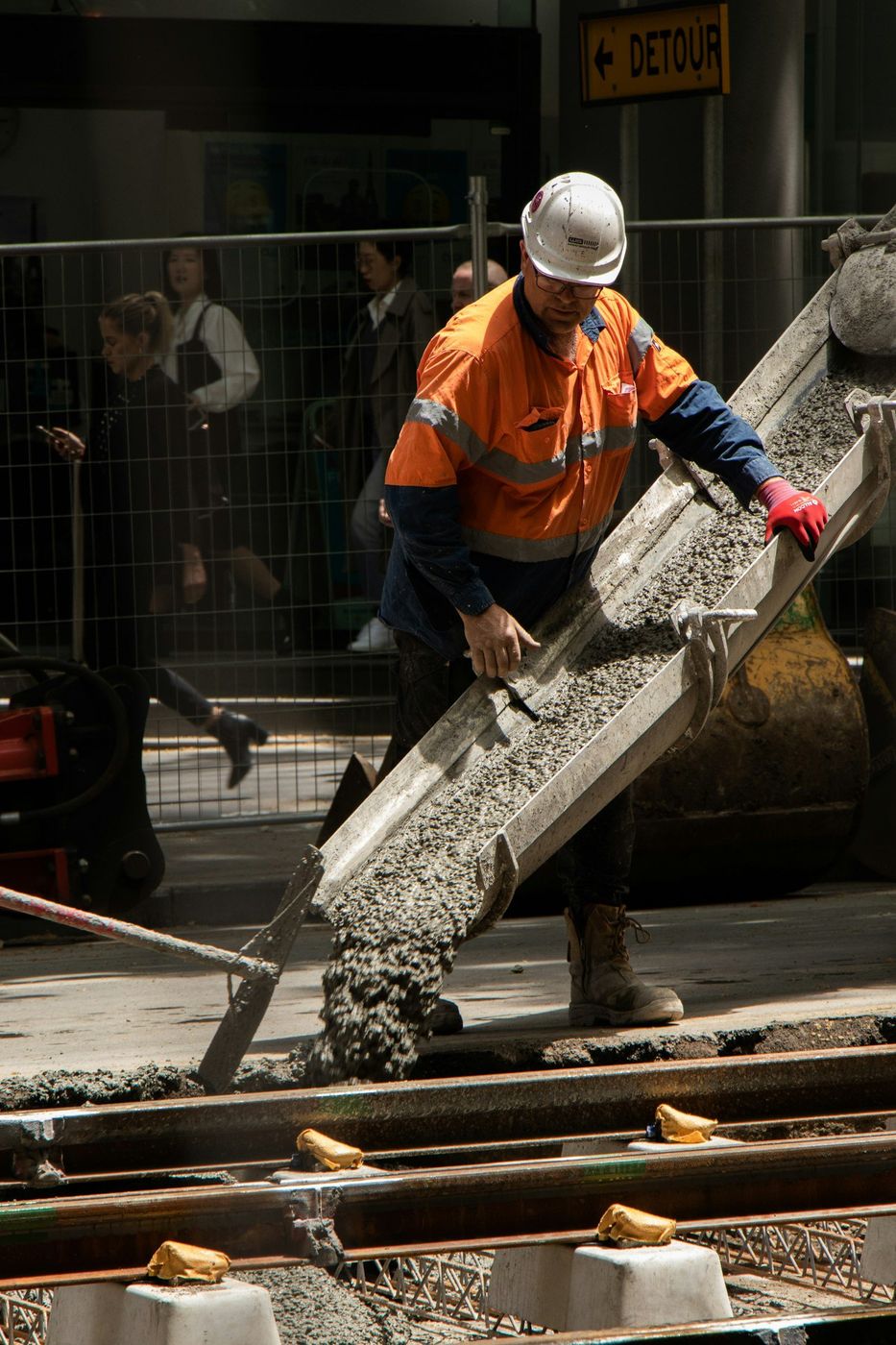
The pergola looks fine from the kitchen window. The evidence is all down at the bottom of the posts.
Most people diagnose a shade structure by looking up. Is the beam sagging, is the frame out of square, did that corner always sit like that. Fair enough, but by the time you see it from the house, it has been going wrong for a couple of years. The early evidence is six feet lower, where wood or steel meets concrete.
Crouch at each post for two minutes. That's the whole inspection. A rust track down the concrete, a sliver of daylight under one edge of a base plate, a collar standing prouder than its neighbors, a ring crack in the patio. Each one is a specific problem with a specific cause, and every one is cheaper now than after the frame racks itself out of square.
A pergola is a light structure with a punishing job. It has to stay square through wind off the foothills, through heavy wet spring snow sitting on the slats, and through ground that changes volume under it every year. All of that funnels into a handful of small connections at the bottom of the posts. That's why the story gets written down there first.
Around Olde Town it's mostly age and water: older patios, posts set right onto slab or into a shallow hole, and twenty years of runoff finding the same low corner. Out in Candelas, Leyden Rock, and Whisper Creek the failures come younger, because plenty of those structures got built into backfill and graded fill that hadn't finished settling. A three-year-old pergola with one low corner isn't a bad pergola. It's a footing standing in dirt that's still moving.
| What you see at the base | What's actually happening | What the fix involves |
|---|---|---|
| A rust track running down the concrete | Water standing in the base plate, working the hardware from underneath | Standoff hardware holding the post above the wet, plus new fasteners |
| Daylight under one edge of a base plate | The footing has tipped or dropped and the plate bears on one corner | Open it up. A shim hides this for a season and rots the connection |
| A concrete collar standing prouder than the rest | Frost gripped the pier and lifted it, and it never came all the way back | A deeper pier with a smooth shaft that ice has nothing to hold |
| A ring crack in the patio around a post | The post and the slab it passes through are moving on separate schedules | Isolate the post properly, or tie the two so they move together |
| Dark, soft wood at the bottom of the post | End grain drinking off the concrete surface for years | Cut back to sound wood, get the post up off the surface, reset it |
| A puddle that never leaves one post | Grade runs toward the post instead of away | Fix the grade first. A perfect footing in a low spot still ages badly |
Send a photo of each post base and we'll tell you whether you have a footing problem or a hardware problem. (303) 569-4046.
Heavy buildings resist wind by being heavy. A pergola has nothing to offer there. Wind pushing under an open roof creates lift, and if the connection at the bottom of each post can't take tension, the structure tries to pick itself up in the gusts and works loose one storm at a time. Loose leads to racked, and racked is a frame that won't come back square no matter what you do below it.
So the footings work in two directions. Down for the load, which is easy. Up against uplift, which nobody plans for. That means real depth, steel in the pier tied to hardware cast in rather than drilled later, and a post base rated to resist tension instead of just keeping wood from sliding. Looks like overkill for something holding up shade. In February it isn't.
Fall is the best window for setting or resetting footings. Ground drills clean, holes stand open, and the yard recovers before you want the patio back. Spring works and is messier, since a rig on saturated ground leaves marks you'll look at all summer.
Winter isn't off the table. The top layer freezes and the auger deals with it. Frozen bearing material is the hard line; nothing gets poured onto it. So cold-month work means drilling and placing the same day, with warm mix water and protection over the fresh concrete. If the goal is shade by June, get the holes in during fall or early spring. Concrete needs its time, and your pergola builder needs posts standing before he can frame.
Still unsure about something?
Call the crew at (303) 569-4046 and we will talk it through.
Get a free, no-obligation estimate from a crew that knows Colorado soil, Colorado weather, and how to finish concrete that lasts.
Accessibility
Adjust the site to fit how you read and browse. Your choices are saved on this device.