
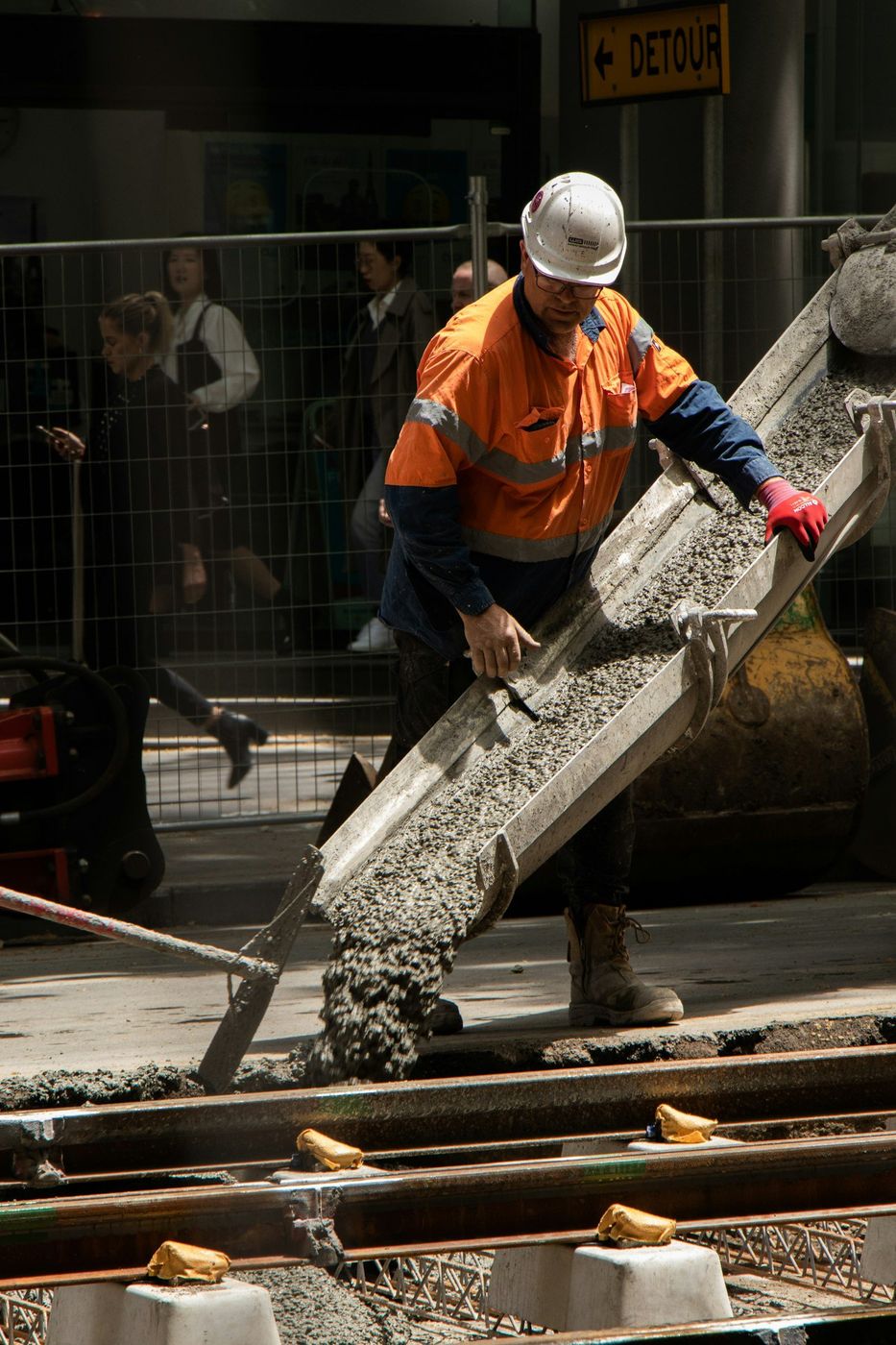
A pond is a slab loaded from both sides, and the yard it sits in decides almost everything about how we build it.
There isn't one Arvada pond. A shaded courtyard basin behind a small older house and a wide formal sheet of water in an open west-side yard share almost nothing but the material. Different debris, different wind, different ground, different pump.
What they do share is the hard part. Concrete holds water only if the joints, the penetrations, and the cure all get handled right on the days they happen. No coating applied later saves a shell built to leak. So we start with your property and work down to the details.
The older streets near Olde Town give us short access, close neighbors, and shade. Shade is good for water: cooler temperature, slower algae. It's bad for equipment, so those builds run smaller, get formed rather than shot, and use a pump quiet enough that the neighbor twenty feet away never thinks about it.
West Woods is the leaf problem. Mature trees dump a load into the water every October and put roots in the way of the dig. Ponds there want depth, a bottom drain, and a skimmer on the downwind side where debris collects anyway.
Then the new west side. Candelas, Leyden Rock, and Whisper Creek are open, sunny, and windy, and the ground under all of it was placed and graded before the houses arrived. More evaporation, more splash lost off a tall waterfall, and a base that has to be built rather than assumed. Bright water too, which means algae pressure unless shade or depth goes into the plan.
| The property | What the yard does to a pond | How we build for it |
|---|---|---|
| Small older lot with tight access | No room for equipment, neighbors close, shade most of the day | Compact formed basin, hand work where machines won't fit, a pump sized for a short spill |
| Mature treed lot | A load of leaves every fall, roots through the dig | More depth, a bottom drain, skimmer set where the wind already pushes debris |
| Open new-build yard on placed fill | Sun, wind, and a base nobody can vouch for | Compacted structural base, lower spill to cut splash loss, shade or depth designed in |
| Yard backing open space | Sound carries and exterior projects may need approval | Low profile edge, quiet equipment chamber, drawings you can hand the HOA |
| Any lot with a grade through it | Storm runoff heading for the basin | Overflow sized for a real downpour, plus a swale that keeps yard water out |
Hardly ever through the body of a wall. Water escapes at the seam between floor and walls, at the pipes passing through the shell, and at cracks that opened because the concrete dried faster than it cured. Three problems, three answers, all handled while the concrete is still wet.
The floor-to-wall joint gets a waterstop cast into it, a ribbed strip half embedded in the floor pour and half in the wall pour, so the seam carries a physical barrier instead of a bond you're trusting. Penetrations get sleeved and sealed at placement. The cracking is handled by curing: seven days wet and covered, which in July takes real effort at this elevation.
Coatings come after all that, and they're a finish, not a fix. A shell that holds water bare gets prettier and easier to clean with a coating. A shell that doesn't gets one more season.
Where the sun lands, where the trees are, and where water runs during a storm. That's the design brief. (303) 569-4046.
Ice governs the structure. A basin with vertical walls and square corners gives freezing water something rigid to shove against, and it shoves hard. We put a little batter on the walls where the design allows, keep the shell thick enough to take it, and set depth so there's liquid water under the ice for anything living down there.
Most Arvada ponds run all winter with a pump moving water and a hole open at the surface. That's easier on the structure than draining it and letting an empty box take frost from both sides. Summer is the reverse problem: sun on the west side drives evaporation. Losing water is normal. Losing an inch a day is not.
Build season runs late April through October. Concrete can push into November with protection, but curing a pond in the cold is a fight nobody needs. Better to start in spring with a whole summer for plants and water chemistry.
Every leaking pond we get called to tells the same story. Floor poured one week, walls the next, nothing in the joint between them.The crew lead's read on it
Still unsure about something?
Call the crew at (303) 569-4046 and we will talk it through.
Get a free, no-obligation estimate from a crew that knows Colorado soil, Colorado weather, and how to finish concrete that lasts.
Accessibility
Adjust the site to fit how you read and browse. Your choices are saved on this device.